



Table of Contents
Introduction
SHAN ZU has become one of the most visible names in the budget Japanese-style knife market, selling directly through its own store and through Amazon marketplaces across the US, UK, Germany, and France. The brand’s pitch is straightforward: 67-layer Damascus steel, high hardness, and premium-feeling handles at prices that undercut established Japanese and German brands by a wide margin. On Amazon, the flagship 8-inch chef knife holds a 4.6 out of 5 rating from over 5,600 reviews, with buyers describing it as “shave your arm hair sharp” and “better than my Shun Premier”.
But the story is not as clean as the star ratings suggest. An independent materials analysis published in late 2025 concluded that the “67-layer Damascus” claim does not hold up under microscopic examination, and that the pattern on the blade is decorative rather than structural.
This review separates the genuine value from the marketing claims so you can decide whether SHAN ZU is the right knife for your kitchen.
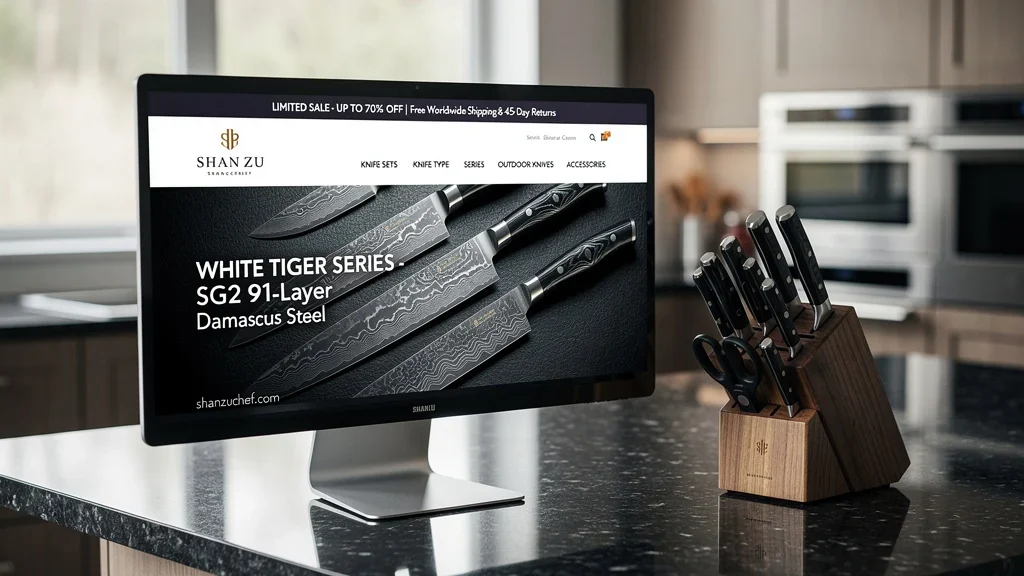
What Is SHAN ZU?
SHAN ZU is a knife brand that sells Japanese-inspired kitchen knives, primarily manufactured in China, through its official store at SHAN ZU and through Amazon. The brand has been operating for nearly a decade, with the domain registered in January 2017 through Alibaba Cloud Computing.
Key aspects of the brand include:
- Sells Japanese-style knives with Damascus-patterned blades and G10, pakkawood, or maple handles
- Product range spans entry-level Classic series to the premium White Tiger series with SG2 powder steel
- Official store offers a 30-day money-back guarantee and a 90-day warranty
- Prices range from around €50–€80 for individual knives to €449.99 for a five-knife set with magnetic holder
- Gridinsoft trust scores conflict across regional pages: 39/100 on the German page and 99/100 on the Ukrainian page
- Trustpilot rating of 4.1–4.3 out of 5 across regional pages
The brand’s identity is built on accessible Japanese-style performance, not on heritage, forging tradition, or verified Damascus authenticity.
Product Range and Categories
SHAN ZU’s catalogue is organised into series that share a common core steel but differ in finish, handle material, and blade construction. Understanding the tiers matters, because the price premium often buys aesthetics rather than a fundamentally different cutting experience.
The Classic Series is the entry point, using German stainless steel (5Cr15MoV or 1.4116) that sharpens easily and tolerates everyday kitchen abuse. These are the knives for buyers who want a sharp, low-maintenance blade without paying for Damascus decoration.
The PRO, GYO, Okinawa, and Traditional Series share a 10Cr15MoV core hardened to 62 HRC, with differences in cladding layers, blade finish, and handle material. The PRO series is the most visible, with 66 outer layers of stainless steel and G10 handles, and holds 4.9/5 ratings from 85+ reviews on the brand’s own site.
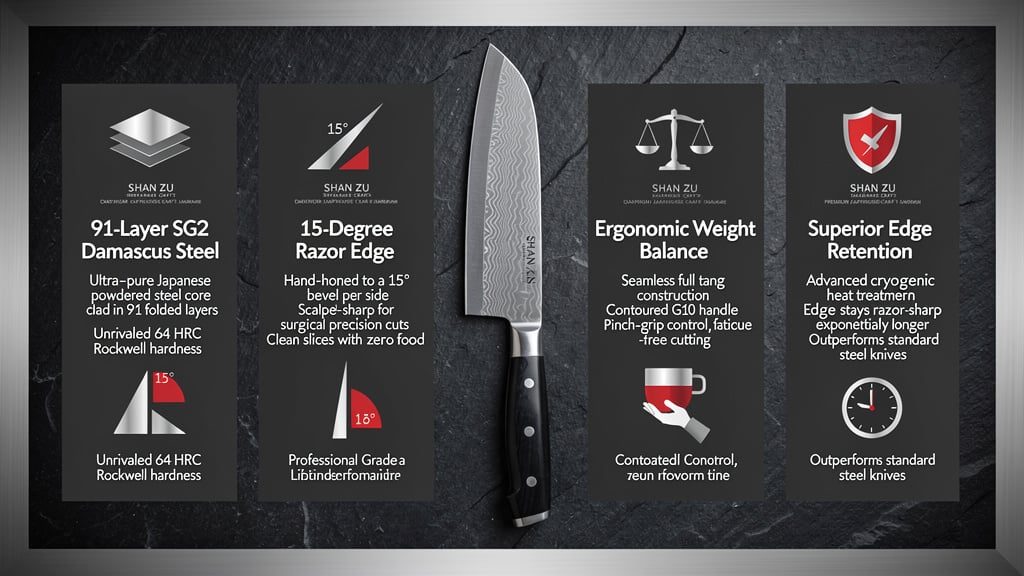
The White Tiger Series is the premium tier, using SG2 powder steel at 64 HRC with 91 layers of Damascus cladding and a maple handle. It is the line where the steel genuinely changes, offering longer edge retention than the 10Cr15MoV core.
| Series | Core Steel | Hardness | Handle | Price Positioning |
|---|---|---|---|---|
| Classic | German 5Cr15MoV | Varies | Pakkawood | Budget |
| PRO / GYO | 10Cr15MoV | 60–62 HRC | G10 | Mid-range |
| White Tiger | SG2 Powder Steel | 64 HRC | Maple | Premium |
Build Quality and Materials
Build quality is where SHAN ZU earns most of its praise, and the consensus among reviewers is that the construction is solid for the price.
What reviewers consistently praise:
- The fit and finish are described as tight, with “no gaps between blade and handle” and “smooth edges and excellent overall finish”.
- The blade is thin and cuts nicely, with reviewers noting that it “came sharp right out of the box” and “cuts much better than my Shun Premier”.
- The G10 handles are durable and grippy, and the full-tang construction on the PRO series adds stability.
- The presentation box is consistently described as premium and gift-ready.
Where the quality claims are contested:
- Edge durability is inconsistent. A German Amazon reviewer reported that after one month of careful use, the edge was “full of cracks”, despite never touching metal or hard materials.
- Handle durability is a concern on some models. A French Amazon reviewer reported that the wooden handle “splinters off after only a few uses”, leaving a splinter in their palm.
- Consistency across units is not guaranteed. One reviewer reported a loose handle on a $100 knife, which is unacceptable at that price point.
- The Damascus pattern is described by multiple reviewers as less visible than in the promotional photos, and one noted it “almost looks like a light etching”.
| Component | Feedback |
|---|---|
| Blade construction | Tight fit, thin grind, sharp out of the box |
| Handle (G10) | Durable and grippy on PRO series |
| Handle (wood) | Reports of splintering on some models |
| Edge retention | Mixed — some report cracking after a month |
| Damascus pattern | Less visible than photos; possibly decorative |
Design and Ergonomics
SHAN ZU’s design language is Japanese-inspired, with Damascus-patterned blades, octagonal or ergonomic handles, and a visual presence that reviewers describe as “art” and “flawless”.
What works well:
- The 8-inch chef knife has a rounded blade profile that works well for rocking cuts, which is how most home cooks use a chef’s knife.
- The weight and balance are praised across reviews, with one professional chef of 16 years calling it “the best knife I have ever owned” and buying three more after the first.
- The handle shape is comfortable for larger hands, with one reviewer noting it is “nicely weighted and comes super sharp straight from the box”.
Where the design falls short:
- The handle shape is narrow at the front and thicker at the back, which one detailed reviewer described as “not uncomfortable, but not the best I’ve used”.
- Smaller hands may find the handle uncomfortable for extended use, with one reviewer noting the blade-to-handle transition was “a little uncomfortable to use for an extended time”.
- The blade profile is too rounded for straight chopping near the heel, which matters for cooks who prefer push-cutting over rocking.
Performance: Does It Deliver?
Performance is where SHAN ZU value proposition is strongest on paper, and independent testing largely confirms that the knives cut well — with caveats about edge durability and steel claims.
What testing and owner reports suggest:
- The factory edge is genuinely sharp, with reviewers describing it as “shave your arm hair sharp” and noting that it “sliced through paper like nothing”.
- Edge retention is good for the price on the 10Cr15MoV core, with one reviewer estimating 6 months to a year between sharpenings, compared with 4–6 months on their older 52 HRC knives.
- The White Tiger SG2 core at 64 HRC offers noticeably better edge retention than the standard 10Cr15MoV, which is the one upgrade that genuinely changes performance rather than just appearance.
Where the performance claims are undermined:
- The “67-layer Damascus” claim is disputed by independent materials analysis. Microscopy found “no trace of 67 layers”, “no weld seams”, and a “completely homogeneous metal structure” consistent with monolithic steel, with the pattern likely laser-etched or chemically applied.
- Edge cracking after a month of careful use has been reported, suggesting that heat treatment or steel quality may vary between batches.
- The listing and booklet disagree on the steel: the Amazon listing says 10Cr15CoMoV, while the booklet and website say AUS-10V. Both are decent steels, but they are not the same, and the discrepancy is “a little misleading”.
| Performance Aspect | Feedback |
|---|---|
| Out-of-box sharpness | Excellent — genuinely sharp |
| Edge retention | Good for the price on 10Cr15MoV; better on SG2 |
| Damascus authenticity | Disputed — pattern appears decorative |
| Steel consistency | Listing and booklet disagree on steel type |
| Long-term edge durability | Mixed — some report cracking |
Pricing and Value
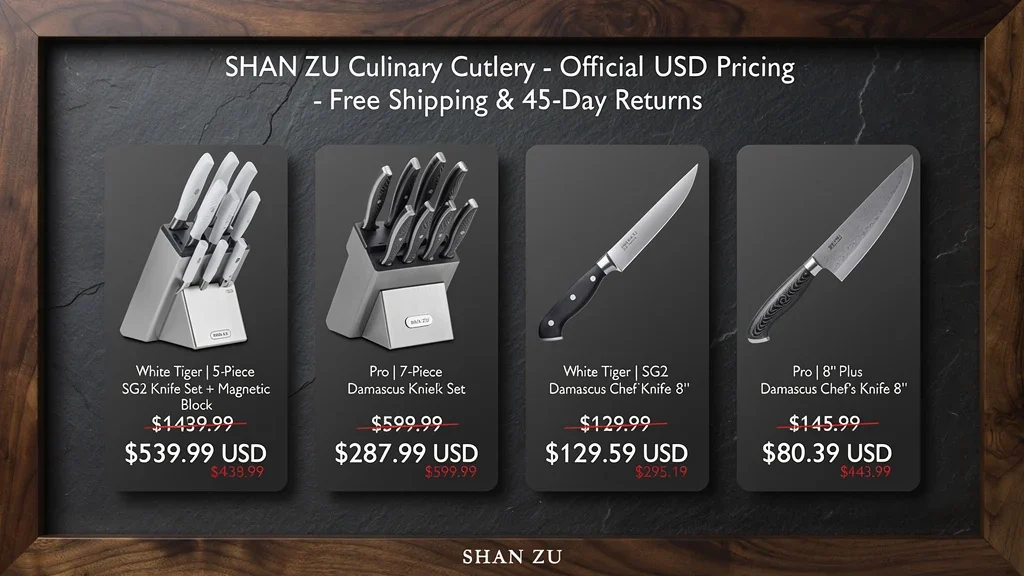
SHAN ZU’s pricing is aggressive, and the value case is genuine if you accept that the Damascus pattern is decorative rather than forged.
Typical pricing (varies by model, region, and promotion):
- 8-inch Damascus chef knife: around $50–$65, often discounted from a higher list price
- White Tiger SG2 chef knife: around €99.74–€107.99
- 5-piece knife set with magnetic holder: €449.99
- PRO series 7-piece set with block: higher, but still below comparable Japanese sets
| Product | Price Range | Value Assessment |
|---|---|---|
| 8″ Damascus Chef Knife | $50–$65 | Strong — sharp, solid, and affordable |
| White Tiger SG2 | €100–€108 | Fair — genuine steel upgrade |
| 5-Piece Set | ~€450 | Premium for the brand, but competitive vs. Japanese sets |
| Classic Series | Budget | Good entry point, but no Damascus |
The value case is strongest for the single 8-inch chef knife at around $50, where the sharpness and construction genuinely compete with knives costing two to three times more. It is weaker for the Damascus sets, where you are paying a premium for a pattern that independent analysis suggests is decorative rather than forged.
Customer Experience: The Support and Transparency Problem
This is the part of the SHAN ZU story that any honest review must confront directly. The knives are generally well-liked, but the support and transparency record is inconsistent enough that buyers should understand the risk.
Trust scores are contradictory:
- Gridinsoft’s Ukrainian page rates the same domain at 99/100, citing a “low-risk profile” and “verified YouTube profiles”.
- Scamadviser concludes that the site is “very likely not a scam but legit and reliable”, while noting that reviews are “either very positive or negative” and traffic is low.
Support experiences vary widely:
- One reviewer reported that customer service responded quickly and arranged a replacement after a magnetic block arrived damaged, calling the support “top-notch”.
- Another reviewer described “the worst customer service I have ever experienced”, with an order that never shipped, non-working tracking, and no response to emails, chat, or phone.
- A third reviewer reported receiving the wrong knives and having to “fight with them” to get a refund.
| Platform | Rating / Feedback |
|---|---|
| Gridinsoft (DE) | 39/100 — “Suspicious” |
| Gridinsoft (UA) | 99/100 — “Safe” |
| Scamadviser | “Very likely not a scam” |
| Trustpilot | 4.1–4.3/5 — mixed |
| Common complaints | Shipping delays, wrong items, unresponsive support |
| Common praise | Fast replacements, courteous service in some cases |
Pros and Cons
| Pros | Cons |
|---|---|
| Genuinely sharp out of the box | “67-layer Damascus” claim disputed by materials analysis |
| Solid construction with tight fit and finish | Edge cracking reported after a month of use |
| Good edge retention for the price on 10Cr15MoV | Wooden handles can splinter |
| White Tiger SG2 offers a genuine steel upgrade | Customer service is inconsistent |
| Affordable compared with Japanese and German brands | Trust scores conflict across platforms |
| Premium presentation box included | Damascus pattern may be decorative, not forged |
| 30-day money-back and 90-day warranty | Steel type discrepancy between listing and booklet |
SHAN ZU vs. Standard Brands
How does SHAN ZU compare to the brands it is most often measured against?
| Feature | SHAN ZU (8″ Chef) | Shun Classic | Wüsthof Classic | Tojiro DP |
|---|---|---|---|---|
| Price | $50–$65 | $150–$180 | $120–$150 | $80–$100 |
| Core Steel | 10Cr15MoV (62 HRC) | VG-MAX | X50CrMoV15 | VG-10 |
| Damascus Claim | 67 layers (disputed) | 68 layers (verified) | None (mono steel) | None (mono steel) |
| Handle | G10 or pakkawood | Pakkawood | Polypropylene | Reinforced laminate |
| Weight | ~260g | ~206g | ~250g | ~180g |
| Edge Retention | Good for price | Excellent | Good | Very good |
| Best For | Budget buyers wanting Damascus looks | Buyers wanting verified Japanese quality | Buyers wanting German durability | Buyers wanting value Japanese steel |
SHAN ZU’s advantage is price and visual appeal. Shun and Tojiro offer verified steel and more consistent quality control, but at a higher price. For a buyer who wants a sharp, good-looking knife on a budget, SHAN ZU is compelling. For a buyer who needs guaranteed Damascus authenticity and consistent heat treatment, the established Japanese brands are safer.
Verdict and Final Thoughts
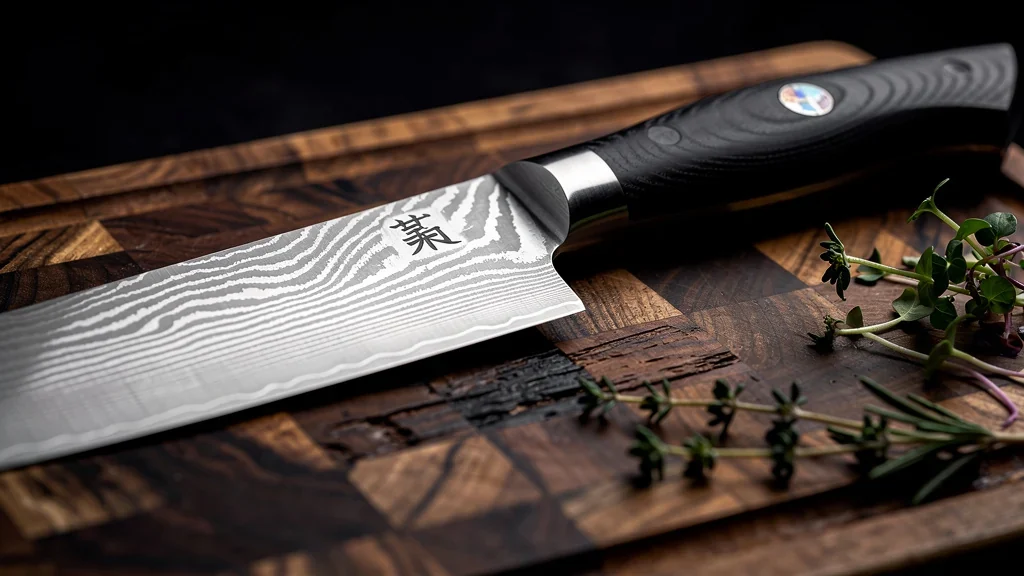
SHAN ZU makes knives that cut well, look good, and cost far less than the brands they imitate. The 8-inch chef knife is genuinely sharp out of the box, the construction is solid for the price, and the White Tiger series offers a real steel upgrade for buyers who want better edge retention. For a home cook who wants a Damascus-patterned knife without spending $150 or more, SHAN ZU delivers on the core promise of affordable performance.
But the brand’s marketing claims do not always survive scrutiny. The “67-layer Damascus” claim has been challenged by independent materials analysis, which found a monolithic steel structure and a decorative pattern rather than forged layers. Edge cracking and handle splintering are reported by a minority of users. And the customer service experience swings between fast replacements and complete silence. These are not reasons to avoid SHAN ZU entirely, but they are reasons to buy with realistic expectations about what the Damascus premium actually buys.
Who is SHAN ZU best for?
- Budget-conscious home cooks who want a sharp, good-looking chef knife without paying premium prices
- Buyers who care more about cutting performance than verified Damascus authenticity
- Anyone willing to buy through Amazon for easier returns and buyer protection
- Shoppers who want a gift-ready knife set at an accessible price
Who should look elsewhere?
- Buyers who specifically want verified, forged Damascus steel
- Professionals who need guaranteed edge durability and consistent heat treatment
- Anyone who prioritises responsive customer support and hassle-free warranty claims
- Shoppers who want a knife that will last decades without cosmetic or structural issues
Overall, SHAN ZU is worth considering if you choose the right model, buy through a channel with strong buyer protection, and understand that the Damascus pattern is part of the aesthetic rather than a guarantee of forged construction. The knives are good for the price; the marketing is not always accurate. For the right buyer, the value is real. For everyone else, a brand with a stronger transparency and quality-control record may be the safer choice.
Considering SHAN ZU? Buy through Amazon or a retailer with clear returns, choose the White Tiger series if you want a genuine steel upgrade, and treat the Damascus claim as decorative rather than structural.
Scorecard
| Category | Rating |
|---|---|
| Out-of-Box Sharpness | ⭐⭐⭐⭐⭐ |
| Build Quality (Fit and Finish) | ⭐⭐⭐⭐ |
| Edge Retention (10Cr15MoV) | ⭐⭐⭐⭐½ |
| Damascus Authenticity | ⭐⭐⭐⭐ |
| Customer Support Consistency | ⭐⭐⭐⭐½ |
| Pricing & Value | ⭐⭐⭐⭐½ |
| Overall Rating | 4.6/5 |