The Fitbit Air might be the anti smartwatch you have been waiting for . This $100 wearable features no screen, no notifications, and no distractions, just pure health tracking. After two weeks of testing, reviewers are convinced that Google’s screenless health tracker has real staying power . At just 12 grams with the band, it is Google’s most minimalist wearable yet, designed to disappear on your wrist rather than compete for attention . Rather than a true rival to the Apple Watch or Pixel Watch, the Fitbit Air feels more like an antidote for anyone who ruled out smartwatches because of the noise and bulk .
Design And Comfort: Light As Air
The Fitbit Air is the first Fitbit product since 2023, and it takes the screenless philosophy to the next level. The sensor itself weighs only 5.2 grams, with the band bringing the total to just 12 grams . This makes it 25 percent smaller than the Fitbit Luxe and 50 percent smaller than the Inspire 3 .
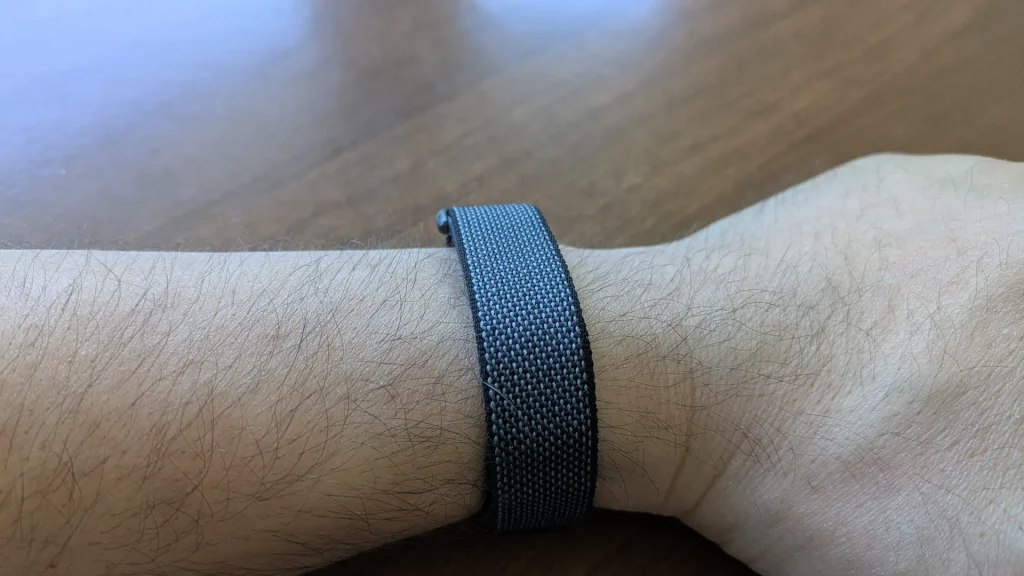
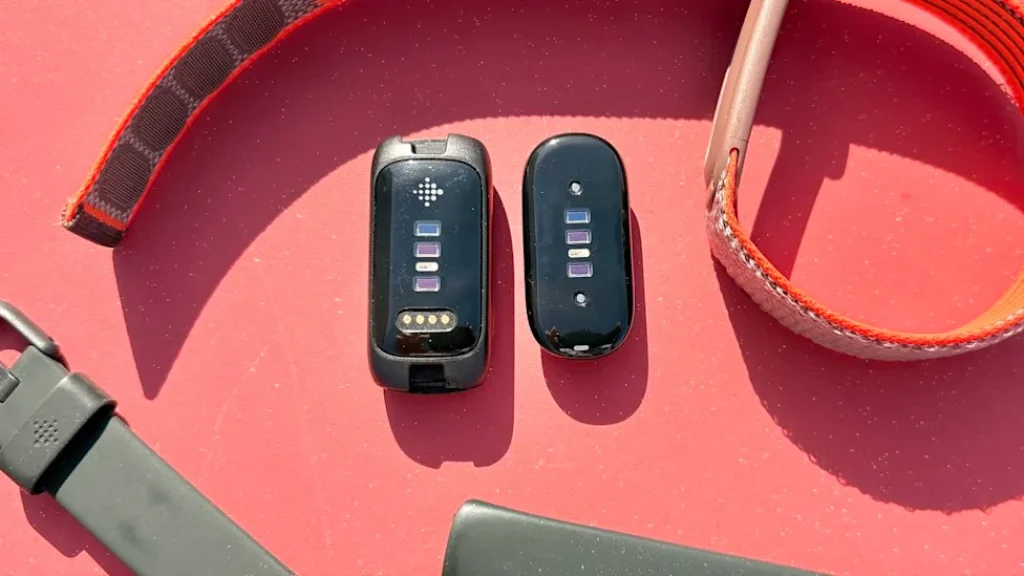
The device features a removable sensor pebble that pops out of the bands with a firm push, allowing you to swap between different styles easily . The woven Performance Loop band is thin and comfortable, though it secures above the wrist rather than below, which takes some getting used to . For workouts, the Active Band made of sweatproof silicone provides a more secure fit .
The Fitbit Air is so comfortable that reviewers often forgot they were even wearing it . This is the entire point. The device is designed to be worn 24/7, including during sleep, without the bulk and weight of a traditional smartwatch .
What The Fitbit Air Tracks
Despite its stripped back exterior, the Air retains an impressive breadth of tracking capabilities . Core metrics include:
- 24/7 heart rate monitoring
- Heart rate variability (HRV)
- Blood oxygen saturation (SpO2)
- Skin temperature variation
- Sleep stages and sleep score
- Cardio load and daily readiness
- Steps and distance
- Irregular heart rhythm notifications for AFib detection
The device is also water resistant up to 50 meters, meaning you can wear it for swimming and showering without worry .
One of the most impressive features for a $100 device is passive AFib detection, which can flag signs of atrial fibrillation and serve as an early warning system for anyone with a family history of heart arrhythmias .
Battery Life: Days Instead Of Hours
One of the clearest advantages of going screenless is battery life. Google claims the Fitbit Air lasts up to seven days on a single charge, but real world testing has shown it can reach eight days with regular workouts and nightly sleep tracking .
A full recharge takes about 90 minutes, and a five minute charge provides an additional day of battery life . This means the Air rarely leaves your wrist, making sleep data more consistent and useful than what most smartwatch users get .
For context, the Pixel Watch 4 barely clears a day and a half with an always on display. The Fitbit Air lasts nearly a full week .
Sleep Tracking: The Unexpected Highlight
The Fitbit Air ended up shifting many reviewers’ relationships with sleep data . It tracks more than just time in bed. Sleep quality, interruptions, restlessness, and recovery all factor into the sleep score.
Powered by Google’s Gemini, the sleep tracking system is reportedly 15 percent more accurate than previous models at capturing interruptions, naps, and transitions between sleep stages .
One of the best features is Smart Wake. You set an alarm, and the Air wakes you up to 30 minutes before that time when you are in a lighter stage of sleep, helping you feel less groggy . The vibration is subtle enough to wake you without being startling, and there is no loud alarm sound to jolt you awake .
Google Health Coach And AI Features
The Fitbit Air‘s hardware is just the entry point. The main event is Google’s AI powered Health Coach, part of the Google Health Premium service . Built on Gemini, the Health Coach translates raw data into personalized guidance, adaptive workout plans, and recovery recommendations .
The coach pulls together fitness, sleep, heart rate, and menstrual cycle data to build training plans that adapt to your real time performance and schedule . It can suggest workouts with video examples, adjust recommendations based on your recovery, and use your own data to signal when to push and when to rest .
Every Fitbit Air purchase includes three free months of Google Health Premium. After that, the subscription costs $10 per month or $100 per year . You can use the band without a subscription and still get the core health tracking experience, but the AI coaching features require the premium tier .
Accuracy: Good For Moderate Exercise, Less For High Intensity
In step tracking tests, the Fitbit Air was nearly flawless, finishing with just a seven step difference out of 2,500 steps manually counted, an error margin of only 0.3 percent .
Heart rate tracking stayed within three beats per minute of a chest strap on average, which is a strong result for a wrist based device . However, during high intensity interval training or sessions with rapid heart rate spikes, the Air can underreport your actual effort. In one test, it lagged by 17 beats per minute at peak effort during a final sprint .
Distance tracking is fully phone dependent since the Air lacks built in GPS. Without your phone, the device overestimated distance by roughly 0.2 miles out of one mile on a measured track . For runners who want accurate pace and distance data without carrying a phone, this is a significant limitation.
What The Fitbit Air Cannot Do
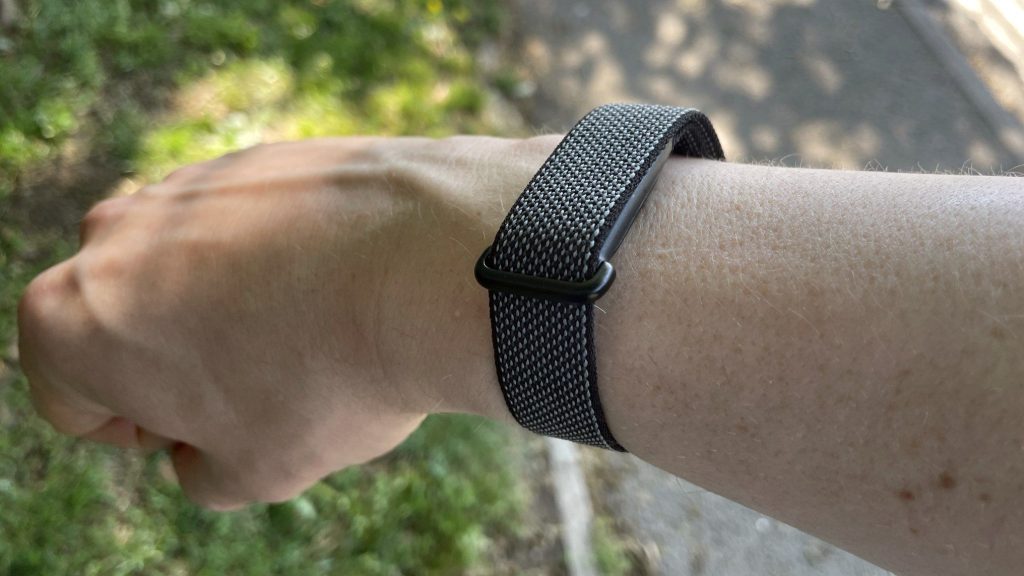
The Fitbit Air has major blind spots that potential buyers should understand. It cannot tell time or ping your phone . There are no notifications, no mobile payments, no music controls, and no glanceable data .
Without a screen, live workout metrics such as pace, heart rate zones, and duration require your phone to be in hand and the app open . Automatic workout detection only reliably recognizes higher intensity activities out of the box. Lower impact workouts like Pilates often slip through entirely, even when heart rate is clearly elevated . Google says detection improves over time, eventually learning to recognize more than 100 activity types based on your habits .
For women’s health, the Fitbit Air is a missed opportunity. Google has the basics, a calendar where you log your period manually, but none of the Air’s temperature data factors into the cycle tracking . That means predicted fertile windows are completely off. Whoop, Oura, and Garmin surface temperature variations directly within cycle tracking, a feature that has been a major selling point for many users .
Fitbit Air Vs The Competition
At $100, the Fitbit Air sits well below the price of an Oura Ring Gen 4 at $349 or even a year of Whoop membership at $239 per year . The Air is also significantly cheaper than the Pixel Watch 4 or any Apple Watch model.
Compared to the Fitbit Inspire 3, which also costs $100 but has a small screen, the Air is essentially the natural evolution of the entry level Inspire line . The Air is smaller, lighter, and removes the distraction of a display entirely.
The closest competitor is the Whoop band. Both are screenless and subscription oriented. Whoop offers a longer battery life at nearly two weeks and more advanced recovery metrics, but it requires a membership with no device purchase option. The Fitbit Air is cheaper upfront and can be used without a subscription, though the best features require Premium .
Pros And Cons
Pros
- Eight day battery life in real world testing
- Extremely lightweight at 12 grams, comfortable for 24/7 wear
- Affordable at $100, much cheaper than Whoop or Oura
- AFib detection on a $100 device is genuinely impressive
- Sleep tracking with Smart Wake feature is excellent
- Works with both Android and iOS
- Can be used without a subscription
- Usable while swimming with 50 meter water resistance
- Swap between different bands easily
Cons
- Cannot tell time or ping your phone
- No built in GPS, requires phone for location data
- Lacks ECG and cEDA sensors found on Pixel Watch
- Heart rate tracking lags during high intensity exercise
- Automatic workout detection misses lower impact activities
- Menstrual cycle tracking does not use temperature data
- Proprietary charger, another cable to carry
- Full AI coaching experience requires Premium subscription after three months