The Ring Battery Doorbell Pro (2026) is the most powerful wireless video doorbell available. It offers 4K resolution with 10x digital zoom, a 140‑degree field of view, and a host of AI features, including Alexa Plus Greetings, video descriptions and Familiar Faces recognition. The doorbell is battery‑powered, freeing you from wiring constraints. It is priced at 250 USD. The device earns a score of 7 out of 10, praised for its camera quality and unique AI but criticised for unreliable package detection, an overwhelming app and half‑baked Alexa Greetings. This review covers the design, video performance, AI features, app experience, privacy considerations and how it compares to competitors like the Nest Doorbell.
Design And Hardware Improvements
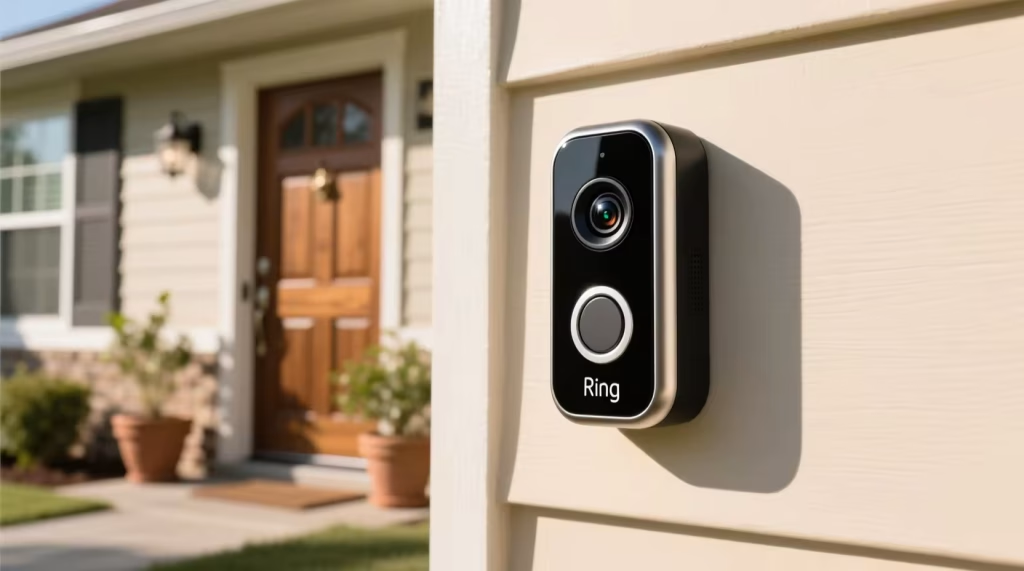
The Ring Battery Doorbell Pro has a thinner, more durable profile than previous Ring models. It is compact and feels high‑quality, putting it on par with the best doorbell designs on the market. The available colours include mocha, navy and deep silver, offering more customisation than typical doorbells.
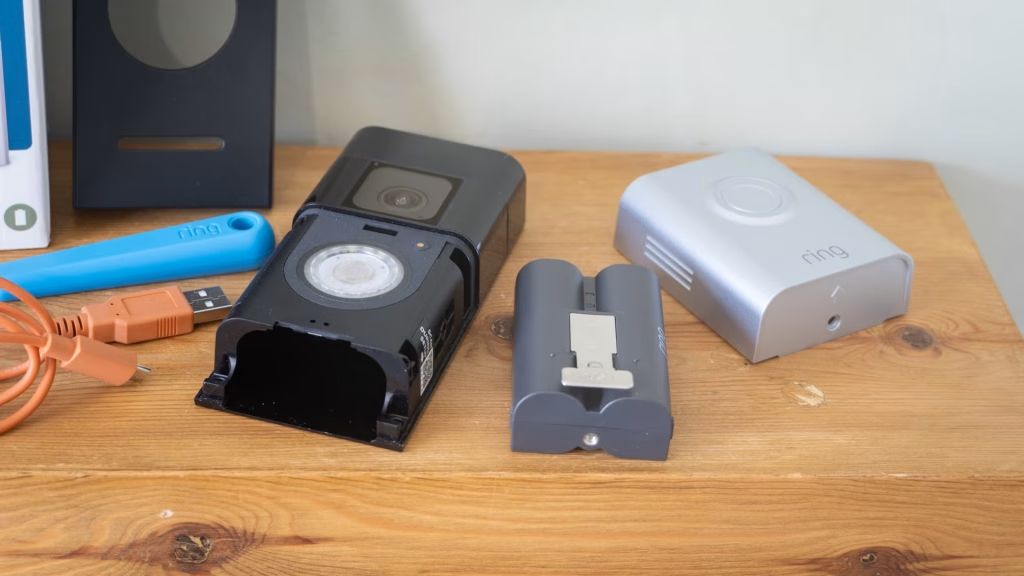
The battery design is a step back. Ring has returned to a battery‑dropout case. You must remove the front faceplate to access the battery and bring it inside for charging. This compromises the weather seal and is less convenient than plug‑in charging. However, it does allow you to swap in a second battery pack (sold separately) so the doorbell never goes offline.
The installation plate includes an angled mount to adjust the camera direction. Screws and anchors are included. The doorbell connects to your home Wi‑Fi and works with the Ring app. Battery life is rated at a few months, depending on activation frequency and feature usage. The included battery dropped several percentage points during testing, which is expected given the high power draw of 4K video and AI processing.
Camera Quality And Video Performance
The headline feature is the 4K Retinal resolution. This is the highest resolution available on a battery‑powered doorbell. The camera has a 140‑degree horizontal and vertical field of view. The 10x digital zoom allows you to examine details, such as package labels or faces, after recording.
The live view includes a Mbps counter, which shows you exactly how much video data is streaming through the app. This is a rare and useful feature for troubleshooting connection issues. Two‑way audio is effective and loud. Video quality depends on your local Wi‑Fi connection strength, but in optimal conditions, the footage is the clearest of any wireless doorbell tested.
Night vision is included, and the doorbell performs well in low light. The wide field of view ensures you can see packages left on the ground and visitors‘ faces at the same time.
AI Features: Alexa Greetings, Video Descriptions And Familiar Faces
Ring has integrated several advanced AI features into the Battery Doorbell Pro. Most require a Ring subscription and an Alexa Plus subscription (included with Amazon Prime or available for 20 USD per month).
Alexa Plus Greetings – This feature allows the AI to carry on a full conversation with a visitor. When someone rings the doorbell, Alexa Plus can greet them, ask questions, take messages and provide instructions. In testing, Alexa Plus handled simple exchanges well. For example, when a tester said “I have a package,” Alexa responded, “You can put it by the garage.” When asked for a signature, Alexa asked what time the recipient would be back and offered to pass the message along.
However, the feature has significant limitations. Greetings did not always activate, even when Ring‘s own video descriptions recognised a delivery. The AI relies on recognising delivery uniforms, which is problematic because many contracted drivers do not wear uniforms. After the conversation ends, neither the Ring app nor the Alexa app provides a summary of the discussion. You must watch the entire recording to extract the information.
AI Video Descriptions – The doorbell generates short text summaries of events, such as “A person with a package walks on a wood deck.” These descriptions are often accurate and provide context at a glance.
Familiar Faces – This opt‑in feature recognises and labels faces of people who visit frequently. It can be useful for identifying family members versus strangers, but it raises privacy concerns.
Package Detection – This is the weakest area. Despite manual adjustments to the package detection zone and sensitivity, the doorbell consistently failed to trigger package alerts. A nearby Nest doorbell correctly alerted for both people and packages, while Ring‘s detection fell short. The AI video descriptions often noted the presence of a package, but the dedicated package alert did not fire.
App Experience And Settings Overload
The Ring app is capable but overwhelming. The device settings screen includes sections for event history, mode settings, alert settings, motion settings, power settings, smart alerts, device health and more. Within each section are sub‑settings, allowing you to adjust sensitivity, choose which events trigger alerts, create routines, enhance battery life and so on.
Unique settings include:
- Unusual event alert mode – sends notifications only for uncommon activity, reducing false alerts.
- Package sensitivity and package zones – dedicated controls for package detection (which did not work well in testing).
- Birds Eye View – tracks continued motion within a defined area.
- Familiar Faces – facial recognition program.
The app also connects to the Ring Neighbors app, which has its own settings and customisations. Ring tries to simplify management with “recommended” settings in many locations, but the learning curve is steep. For the average user, it could take days or weeks to learn everything the doorbell can do and to configure it exactly how you want.
Ring And Privacy Considerations
Ring no longer shares data with police upon request unless there is a signed warrant or similar legal requirement. Sharing features for law enforcement in the Ring Neighbors app are opt‑in, and those notifications can be blocked. The option to submit videos and descriptions to Ring or Amazon is also opt‑in.
However, using a Ring doorbell enables Ring Neighbors features that are opt‑out. This includes Search Party, which can recognise lost pets using AI. Leaked emails have raised concerns that the technology could potentially be used to track humans. You can turn off all opt‑out functions, but it requires a deep dive into settings. The reviewer has a guide to help users disable less‑popular Ring features.
Ring Battery Doorbell Pro Vs Google Nest Doorbell (Wired)
| Aspect | Ring Battery Doorbell Pro (2026) | Google Nest Doorbell (Wired, 3rd Gen) |
|---|---|---|
| Power Source | Battery (wireless) | Wired |
| Resolution | 4K Retinal | 2K |
| Zoom | 10x digital | Not specified |
| Field of View | 140° horizontal & vertical | 145° diagonal |
| AI Features | Alexa Greetings, video descriptions, Familiar Faces | Familiar face detection (Nest Aware) |
| Package Detection | Unreliable (failed in testing) | Reliable (tested) |
| Smart Home Integration | Amazon Alexa only | Google Home |
| Subscription Required | Yes (Ring Protect) + optional Alexa Plus | Yes (Nest Aware) |
| Price | 250 USD | 180 USD |
| Best For | Alexa users, wireless convenience | Google Home users, reliable package detection |
Ring‘s doorbell offers higher resolution and wireless freedom. Nest offers more reliable package detection and a lower price. For users already invested in Amazon‘s ecosystem, Ring is the natural choice. For Google Home users, Nest is better.
Pros And Cons Of The Ring Battery Doorbell Pro
Pros
- 4K resolution with 10x digital zoom is the best available on a battery doorbell.
- 140° field of view captures packages and faces simultaneously.
- Compact, durable and well‑built design with multiple colour options.
- Alexa Plus Greetings can carry on full conversations with visitors.
- AI video descriptions provide useful context for events.
- Familiar Faces recognition (opt‑in) helps identify frequent visitors.
- Battery‑powered, so no wiring is required.
- Mbps counter on live view helps diagnose connection issues.
- Two‑way audio is effective and loud.
- Unique settings like unusual event alerts and Birds Eye View.
Cons
- Package detection is unreliable; often fails to trigger alerts.
- Alexa Plus Greetings does not always activate, especially for drivers without uniforms.
- No summary of Greetings conversations is provided; you must watch the recording.
- Alexa Plus subscription is required for Greetings (20 USD/month unless you have Prime).
- Ring Protect subscription is required for cloud storage (starting at 5 USD/month).
- The app is overwhelming, with hundreds of settings to learn.
- Battery dropout design is a step back; you must remove the faceplate to charge.
- At 250 USD, it is one of the most expensive video doorbells.
- No support for Google Home or Apple HomeKit (Alexa only).
- Opt‑out Neighbors features may raise privacy concerns for some users.
Frequently Asked Questions (FAQs)
Is the Ring Battery Doorbell Pro compatible with existing doorbell wiring?
Yes, you can wire it to your existing doorbell for constant power, but the doorbell is designed to work as a battery‑powered device. Wired mode may extend battery life but does not eliminate the need for a subscription for cloud recording.
Does the Ring Battery Doorbell Pro work with Google Home or Apple HomeKit?
No. Ring is owned by Amazon, so it only integrates with Amazon Alexa. There is no official Google Home or Apple HomeKit support.