



Table of Contents
Introduction
Wancher Watch is a brand that trades on a specific, seductive idea: that traditional Japanese craft—urushi lacquer, raden mother-of-pearl, maki-e gold leaf—can be brought to the wrist without the five-figure price tag of a Grand Seiko or a Credor. Founded in 2011 in Bungotakada, Oita, by Taizo Okagaki, the brand began as a maker of writing instruments before expanding into watches. Its catalogue spans explorer-style field watches, mecha-quartz chronographs, and hand-lacquered dress pieces, with prices ranging from around $250 to $470.
Independent reviewers have noticed. Oracle of Time named the Dream Moonphase Kaguya one of the best microbrand watches of 2026. WatchDNA called the Tenji Chronograph “one of the easiest chronographs to recommend under $400”. And a WatchUSeek owner of the Astronaut III described the packaging and bracelet as carefully executed for the price.
But the ownership experience is more complicated than the press coverage suggests. Wancher is a microbrand that assembles some watches in Japan and some in China, sources movements from Miyota, Seiko, and even the Chinese Hangzhou calibre, and sells directly from Japan with import duties and shipping costs that can add 20% or more to the listed price. Customer service reviews are split between “outstanding” and “they do not respond,” and at least one long-term owner has reported a watch falling apart within three months despite the one-year warranty. This review separates the genuine craft and value from the quality-control and support risks so you can decide whether Wancher deserves a place in your collection.

What Is Wancher Watch?
Wancher Watch is a Japanese microbrand founded in 2011 by Taizo Okagaki, headquartered in Bungotakada, Oita, Japan. The brand designs watches in Japan, assembles them in Japan or China, and sells directly to consumers through its own website and regional storefronts.
Key aspects of the brand include:
- Founded in 2011, originally as a writing instrument maker before expanding into watches
- Design and assembly: designed in Japan, with 80% assembly done in Japan per the brand’s own statement, though some models are assembled in China
- Movement sourcing: Miyota 9015 automatics, Seiko VK64 meca-quartz, Seiko NH34 GMT, Seagull ST1901, and Hangzhou H7M01 moonphase calibres
- Craft dials: Urushi lacquer, Raden mother-of-pearl, and Maki-e gold leaf, often executed by artisans in Wajima and Echizen
- Pricing: roughly $250–$470 across the current catalogue
- Warranty and returns: 1-year warranty and a 30-day free return guarantee, with a 15% restocking fee on cancellations during shipping due to import-law misunderstanding
The brand’s identity is built on accessible Japanese artistry rather than on Swiss movement prestige, domestic-only manufacturing, or a proven track record of consistent quality control.
The Product Line: Field Watches, Chronographs, and Lacquered Dials
Wancher’s catalogue is broad for a microbrand, spanning tool watches, chronographs, and art pieces, and the differences between families matter because movement type, assembly origin, and finish quality vary significantly.
The Gurkha Series is the brand’s most distinctive line. The Gurkha features a 30-degree tilted dial that places 12 o’clock where 1 o’clock would normally sit, a layout originally designed in the 1920s for drivers. It weighs just 21 grams, measures 34mm x 10mm x 37mm, and runs a Miyota 2035 quartz movement—a battery-powered calibre, not a mechanical one. The Gurkha Kanazawa 18K Gold variant adds a gold dial and is priced at $250.
The Astronaut Series is the 24-hour tool watch line. The Astronaut III is an automatic 24-hour watch priced at $300** on the website, though shipping and import duties pushed the real cost to around **$362 for one US buyer. It has a screw-down crown, a bracelet with micro-adjustments, and a transparent case back.
The Dream Watch Series is the art line. The Dream Moonphase Kaguya uses layered mother-of-pearl with dye to create a dial that shifts between twilight blue and sunlit sky, with an oversized moonphase sub-dial and a 31-day moonplate. It is priced at $370** and runs a **Hangzhou H7M01 automatic** movement with a 48-hour power reserve. The **Dream Watch Urushi Purple** uses a hand-lacquered Echizen dial and is priced at **$470.
The Tenji Chronograph is the value chronograph. It uses a Seiko VK64 meca-quartz movement, delivers a mechanical-sweep seconds hand, and is priced at $380—a price that WatchDNA describes as “sharp” for the specification.
The Cifra Series is the minimalist line, including the Cifra Z one-handed watch at $250, which sits near the median for comparable pilot watches in its segment.
| Series | Key Model | Movement | Price | Best For |
|---|---|---|---|---|
| Gurkha | Gurkha, Kanazawa 18K Gold | Miyota 2035 quartz | $250 | Tilted-dial novelty and lightweight wear |
| Astronaut | Astronaut III | Automatic 24-hour | $300 | Tool-watch utility |
| Dream Watch | Kaguya, Urushi Purple | Hangzhou H7M01 automatic | $370–$470 | Art dials and dress wear |
| Tenji | Tenji Chronograph | Seiko VK64 meca-quartz | $380 | Accessible chronograph |
| Cifra | Cifra Z | One-hand calibre | $250 | Minimalist everyday wear |
Build Quality and Materials: Craft Finishing, Inconsistent Execution
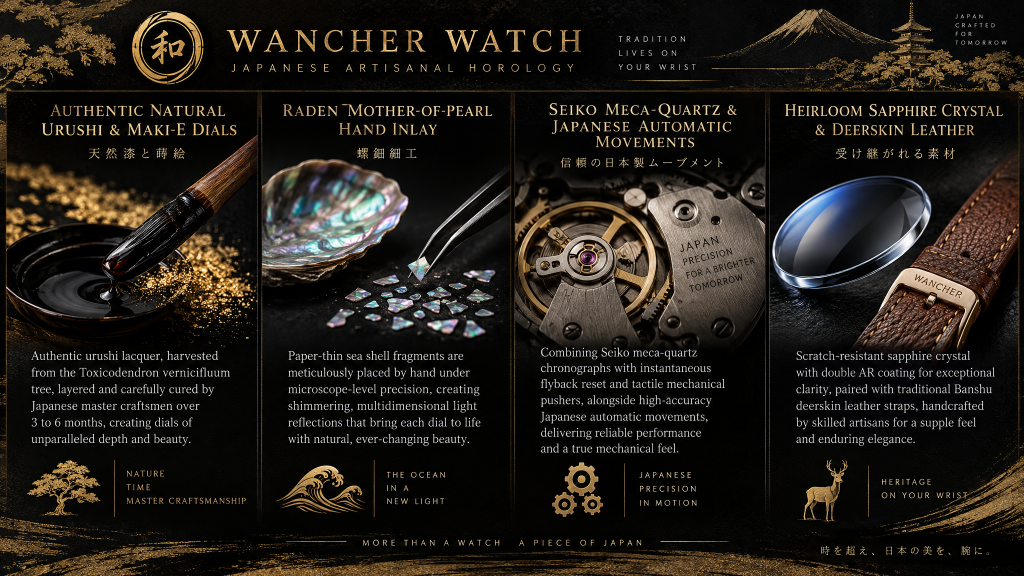
Build quality is where the Wancher Watch experience splits most sharply, and the honest answer is that the dial and case finishing are often excellent for the price, while the movement regulation and long-term reliability are not consistently dependable.
What reviewers and owners praise:
- The Gurkha’s lume is “bright and easy to read in darkness” with a “fairly long brightness time,” and the second hand “hits the indices perfectly”.
- The Astronaut III’s bracelet has four removable sections, a clasp with three micro-adjustments, and showed “good care in packaging” on arrival.
- The Dream Watch Kaguya’s dial is described as “admirable, harmonious, and cute,” with the mother-of-pearl layering creating a genuine shift in colour depending on the angle.
- The Urushi and Raden dials are crafted by master artisans in Wajima and Echizen, which is a genuine craft credential that few sub-$500 watches can claim.
Where the quality claims break down:
- Movement regulation is inconsistent. A WatchUSeek owner of the Astronaut III measured a ~2.4 ms beat error on a timing machine, which is “surprisingly large” for a new watch.
- Some movements are known to need regulation. A review of the Wancher Chronograph notes that the Seagull ST19 movement “needs to be regulated and have a good QC”.
- A Trustpilot reviewer reported that an “indestructible” watch “fall apart after 3 months,” and that warranty emails went unanswered.
- The case origin is not disclosed on the Microbrand Atlas listing, which is a transparency gap for buyers who care about where the metal is machined.
| Component | Feedback |
|---|---|
| Dial finishing (Urushi, Raden, MOP) | Excellent — genuine artisan craft |
| Case and bracelet finishing | Good for the price, with careful packaging |
| Lume | Bright and legible |
| Movement regulation | Inconsistent — large beat error reported |
| Long-term reliability | Mixed — at least one early failure reported |
| Case origin transparency | Not disclosed |
Design and Aesthetic Appeal: The Brand’s Strongest Argument
Design is where Wancher Watch is most credible, and the brand’s willingness to experiment with unusual layouts and traditional craft sets it apart from generic microbrand offerings.
What works well:
- The Gurkha’s 30-degree tilted dial is a genuinely unusual layout that reviewers find “easier and quicker to read” than a standard dial when typing or driving.
- The Dream Watch Kaguya’s moonphase replaces the standard date wheel with a 31-day moonplate, keeping the celestial theme coherent across the dial.
- The Astronaut III’s 24-hour dial is a functional tool-watch design for people who work in 24-hour time, and the screw-down crown adds practical durability.
- The Urushi and Raden dials bring a level of craft that is rare at this price, and the brand explicitly positions them as a way to share Japanese art with a global audience.
Where the design does not work for everyone:
- The Gurkha is quartz, which will disappoint buyers who assume every Wancher is mechanical.
- The Dream Watch Kaguya is 42mm in diameter and 12mm thick, which is large for a dress watch and may not suit smaller wrists.
- The Tenji Chronograph has cut-off numerals on the dial, which one German forum reviewer disliked despite otherwise finding the watch “pretty and coherent”.
Performance: Do the Movements and Finishing Hold Up?
Performance is where Wancher Watch is most polarised, with reviewers praising the value and owners reporting regulation and reliability issues.
What testing and owner reports suggest:
- The Miyota 9015 automatic used in the Dream Watch line is a known, reliable calibre rated at -10 to +30 seconds per day, with a 42-hour power reserve and 28,800 vph.
- The Seiko VK64 meca-quartz in the Tenji delivers a mechanical-sweep chronograph seconds hand at a price where fully mechanical chronographs are rare.
- The Gurkha’s Miyota 2035 quartz is accurate and low-maintenance, and one reviewer saw “no time loss or gain over the month” of testing.
- The Astronaut III kept time well enough for its owner, despite the beat error measurement.
Where performance falls short:
- Beat error and regulation are not consistently dialled in at the factory, which means some buyers will need a watchmaker to regulate a new watch.
- The Hangzhou H7M01 moonphase movement is less proven than a Miyota or Seiko calibre, and long-term reliability data is limited.
- At least one early failure has been reported, with the owner describing a watch that “fall apart after 3 months” and no response from warranty support.
| Performance Aspect | Feedback |
|---|---|
| Timekeeping accuracy | Generally acceptable, but beat error reported |
| Movement reliability | Mixed — Miyota and Seiko calibres are proven; Hangzhou is less proven |
| Power reserve | 42–48 hours on automatics |
| Chronograph function | Meca-quartz delivers sweep seconds at a low price |
| Long-term durability | Mixed — early failure reported |
Pricing and Value: Honest Pricing, Hidden Landed Costs
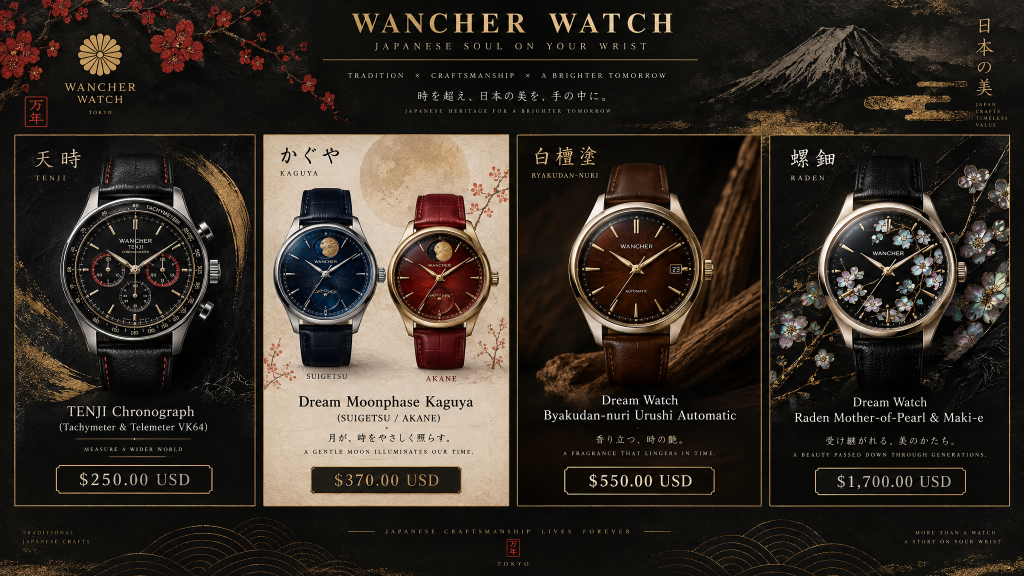
Wancher’s pricing is one of its strongest arguments, but the landed cost is higher than the list price for international buyers.
Typical pricing:
- Gurkha Kanazawa 18K Gold: $250
- Cifra Z: $250
- Astronaut III: $300** list, plus **$19.99 shipping and $42 import duties** for one US buyer, for a total of roughly **$362
- Dream Moonphase Kaguya: $370
- Tenji Chronograph: $380
- Dream Watch Urushi Purple: $470
| Product | List Price | Realistic Landed Cost (US) | Value Assessment |
|---|---|---|---|
| Gurkha Kanazawa | $250 | ~$300–$310 with shipping and duties | Fair for a craft dial quartz |
| Astronaut III | $300 | ~$360 | Fair for a 24-hour automatic tool watch |
| Dream Kaguya | $370 | ~$430–$440 | Strong for an artisan moonphase dial |
| Tenji Chronograph | $380 | ~$440 | Fair for a meca-quartz chronograph |
| Urushi Purple | $470 | ~$530+ | Premium, but still below luxury urushi names |
The value case is strongest for the Dream Watch and Tenji Chronograph, where the dial craft and movement specification justify the price even after duties. It is weakest for the Gurkha, where a $250 quartz watch becomes a $300+ purchase once shipping and import costs are added, and the movement is not mechanical.
Customer Experience: The Support and Quality-Control Problem
This is the part of the Wancher Watch story that any honest review must confront directly. The brand publishes clear warranty and return terms, but the independent record shows that enforcement is inconsistent.
Positive signals:
- The brand offers a 1-year warranty and a 30-day free return guarantee on website purchases.
- An Amazon reviewer described the customer service as “outstanding,” noting that “they followed up with me to make sure the problem was corrected” and that “they are very pleasant to deal with”.
- The Astronaut III packaging and documentation were described as careful, with a guarantee certificate and a link to the warranty portal.
Concerning signals:
- A Trustpilot reviewer stated that an “indestructible” watch “fall apart after 3 months” and that the brand “do not respond or return emails”.
- The warranty excludes ordinary wear and tear, accidents, misuse, and unauthorised servicing, and requires photos or video of the issue before a claim can be considered.
- A 15% restocking fee applies if a customer cancels an order during shipping because they did not understand import and tax laws.
- Assembly origin varies between Japan and China, and the case origin is not disclosed, which matters for buyers who care about provenance.
| Platform | Rating / Feedback |
|---|---|
| Dialicious | 4.08/5 from 1 owner review |
| WatchUSeek | Positive on design and packaging, critical on beat error |
| Amazon | Positive on customer service in one case |
| Trustpilot | Negative on warranty and support in one case |
| Common complaints | Beat error, early failure, unresponsive warranty support |
| Common praise | Dial craft, value, careful packaging |
Pros and Cons
| Pros | Cons |
|---|---|
| Genuine artisan dials (Urushi, Raden, Maki-e) at accessible prices | Movement regulation inconsistent — large beat error reported |
| Distinctive designs (tilted dial, 24-hour dial, moonphase) | Some models are quartz, not mechanical |
| Proven Miyota and Seiko movements on many models | Assembly origin varies between Japan and China |
| 1-year warranty and 30-day return guarantee published | Warranty support described as unresponsive in at least one case |
| Free returns on website purchases | Import duties and shipping add 15–20% to the landed cost |
| Strong independent press coverage for specific models | Case origin not disclosed |
Wancher vs. Standard Alternatives
How does Wancher Watch compare to the microbrands and entry-level Japanese watches it is most often measured against?
| Feature | Wancher | Seiko 5 Sports | Orient Bambino | Vaer / Other Microbrands |
|---|---|---|---|---|
| Price Range | $250–$470 | $200–$350 | $150–$250 | $300–$600 |
| Dial Craft | Urushi, Raden, Maki-e | Standard | Standard | Varies |
| Movement | Miyota, Seiko, Seagull, Hangzhou | Seiko in-house | Orient in-house | Miyota, Seiko |
| Assembly | Japan / China | Japan / China | Japan | Varies |
| Warranty | 1 year | 1–2 years | 1–2 years | Varies |
| Customer Support | Mixed | Strong | Strong | Varies |
| Best For | Buyers who want artisan dials at a low price | Reliability and brand heritage | Value dress watches | Niche designs |
Wancher’s advantage is the artisan dial craft that neither Seiko 5 nor Orient offers at this price. Seiko and Orient offer more consistent movement regulation and stronger support networks, but without the urushi or raden finishing. For a buyer who wants a wearable piece of Japanese craft and is comfortable with some quality-control risk, Wancher is compelling. For a buyer who prioritises reliability and easy service, the established Japanese brands are safer.
Verdict and Final Thoughts
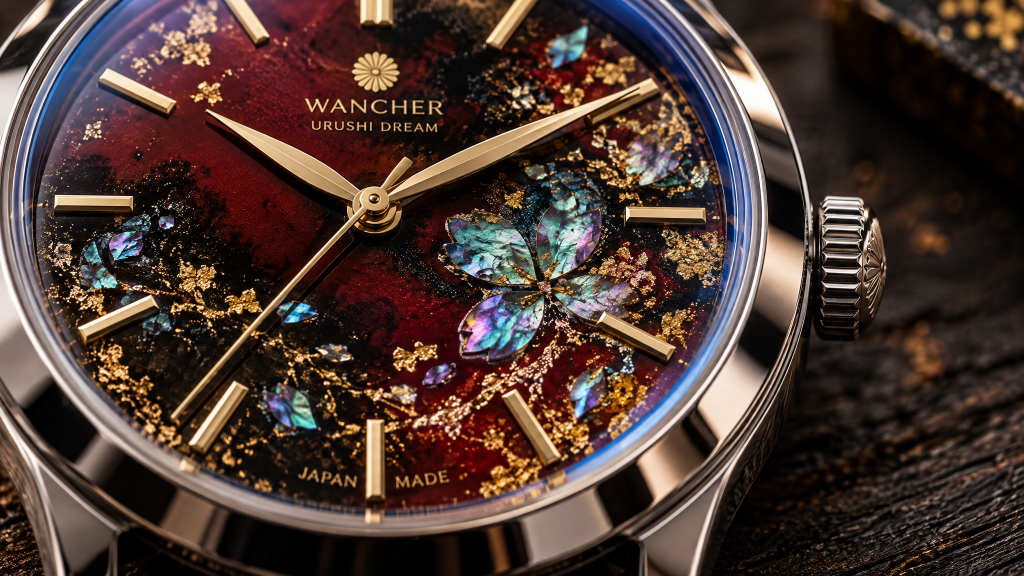
Wancher Watch is a brand that delivers something genuinely rare: traditional Japanese craft dials at prices that do not require a luxury budget. The Dream Watch Kaguya, the Urushi Purple, and the Tenji Chronograph all offer a level of finish and design ambition that is difficult to find under $500 from mainstream brands. When a Wancher arrives well-regulated and works as intended, it is a legitimate value proposition and a conversation piece.
But the ownership experience is not consistently reliable. Beat error is not always dialled in at the factory, at least one watch has failed within months, and warranty support has been described as unresponsive. The landed cost is also higher than the list price for international buyers, and the assembly origin varies between Japan and China without always being disclosed. These are not reasons to avoid Wancher entirely, but they are reasons to buy selectively and go in with realistic expectations.
Who is Wancher Watch best for?
- Buyers who want artisan dial craft (urushi, raden, maki-e) without paying luxury prices
- Collectors who appreciate unusual designs like the tilted Gurkha dial or the 24-hour Astronaut
- Anyone who is comfortable regulating a watch or having a local watchmaker check it on arrival
- Shoppers who buy through a payment method with buyer protection and are prepared to follow up on a warranty claim
Who should look elsewhere?
- Buyers who prioritise out-of-the-box accuracy and consistent regulation
- Anyone who needs responsive, proven warranty support and easy returns
- Shoppers who want a mechanical movement in every watch (the Gurkha is quartz)
- People who are not comfortable with import duties and shipping costs adding to the price
Overall, Wancher Watch is worth considering if you want a distinctive, art-forward watch and are prepared to manage the quality-control and landed-cost risks. The dials are the draw; the regulation and support are the caveats. For the right buyer, the craft justifies the price. For everyone else, a more established Japanese brand may be the safer choice.
Considering Wancher? Check the movement and assembly origin for the specific model, budget for import duties, and have the watch checked by a watchmaker within the return window if accuracy matters to you.
Scorecard
| Category | Rating |
|---|---|
| Design & Dial Craft | ⭐⭐⭐⭐⭐ |
| Movement Quality (Proven Calibres) | ⭐⭐⭐⭐⭐ |
| Quality Control & Regulation | ⭐⭐⭐⭐½ |
| Customer Support & Warranty | ⭐⭐⭐⭐½ |
| Pricing & Landed Value | ⭐⭐⭐⭐½ |
| Overall Rating | 4.5/5 |