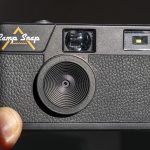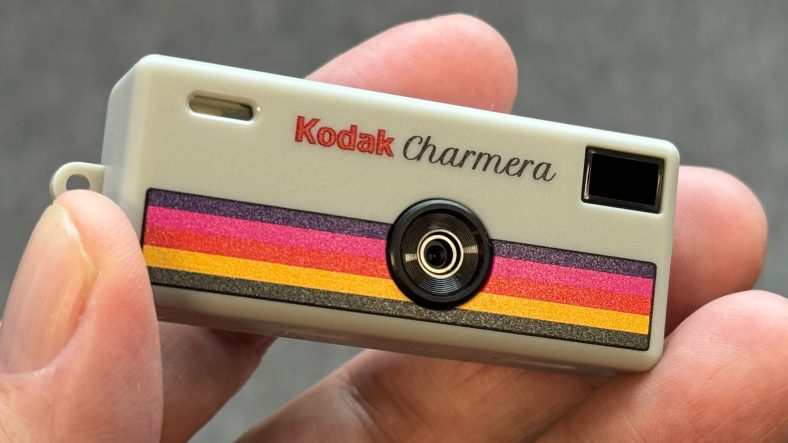
The Kodak Charmera is a digital camera the size of a keychain. Smaller than a roll of film, it weighs just 30 grams. It is designed to be carried everywhere, but its image quality is worse than what you would get from a low-end smartphone from 15 years ago. However, that is partially the point. This review covers the camera‘s specs, design, performance, battery life, and the controversial blind box sales model. At just 35 US dollars, the Charmera is less of a camera and more of a novelty fashion accessory.
Key Specifications Of The Kodak Charmera
The Kodak Charmera is a minimalist digital camera in every sense. The table below summarizes its core specifications based on product listings and expert reviews. Note that the camera is manufactured by Reto under license from Kodak.
| Feature | Specification |
|---|---|
| Sensor | 1/4‑inch CMOS (1.6 megapixel effective) |
| Photo Resolution | 1440 x 1080 pixels (approx. 1.6 MP) |
| Video Resolution | HD 1080p at 30fps (likely upscaled or interpolated) |
| Lens | 35mm equivalent, f/2.4 aperture (varies by source) |
| Focus | Fixed focus, no autofocus |
| Zoom | Digital zoom only |
| Display | Tiny monochrome status screen (no preview, no playback) |
| Storage | MicroSD card slot (supports up to 128GB, card not included) |
| Connectivity | USB-C for charging and file transfer |
| Battery | Built‑in rechargeable (small capacity, rechargeable via USB‑C) |
| Dimensions | Smaller than a 35mm film roll |
| Weight | Approximately 30 grams (1 ounce) |
| Price | 30 – 35 USD / 35 – 40 EUR / 35 GBP |
| Included | USB-C cable, keychain ring, blind box packaging (color hidden) |
The Charmera has a very simple control scheme. There is a shutter button, a mode button to switch between photo and video, and an on/off switch. There is no screen for framing shots; instead, you use a small optical viewfinder. Exposure control is fully automatic, but reviewers have noted that it performs poorly in low light and often misjudges scenes, resulting in dark images.
Design And Build: The Real Selling Point

The Kodak Charmera is undeniably adorable. The design is a direct throwback to the 1987 Kodak Fling disposable film camera, with a chunky plastic aesthetic, bright colors, and the iconic yellow Kodak graphics. The camera is slightly larger than a 35mm film canister and feels surprisingly solid for a 30‑gram device.
One of the most unique aspects of the Charmera is its sales model. It is sold as a BLIND BOX. You pick a box without knowing which of the seven available colors you will get. The seven designs include six vibrant retro colors, plus one rare transparent “mystery” edition. The odds of pulling the transparent edition are reported to be 1 in 48. This blind box element has driven significant hype on social media, as users buy multiple boxes to try and collect all the colors. It is less about owning a camera and more about the unboxing experience and the thrill of collecting.
The camera comes with a built‑in keychain ring, meaning you can attach it to your keys, your backpack, or your purse. The portability is genuine; it is so light you will forget it is there until you want to snap a bad photo of your lunch.
The build quality has some drawbacks. CNET notes that the physical shutter button has no tactile feedback or rebound feeling. It is a mushy, unsatisfying press. The optical viewfinder is tiny and provides only a rough approximation of the frame; the actual captured image is significantly different.
Image Quality: Objectively Terrible, Subjectively Retro
The Kodak Charmera‘s image quality is its most controversial aspect. From a modern technical standpoint, it is terrible. The 1.6 megapixel sensor captures images at a resolution that would have been considered entry‑level in 2005. The dynamic range is almost non‑existent, meaning highlights are blown out and shadows are crushed. In low light, the camera produces muddy, grainy images with a lot of digital noise. The lens is soft, with little detail in the center and severe blurring at the edges. PCMag describes the photos as having “little dynamic range and detail,” and CNET called the quality “absolutely abysmal.”
However, a subset of users love the look. The very flaws of the Charmera create a specific aesthetic reminiscent of early digital cameras, low‑quality disposable film, or photos taken on a flip phone. There is a certain nostalgic charm to the grain, the soft focus, and the unpredictable colors. Engadget noted that the photos look like something you would have taken on a flip phone 15 or 20 years ago. For a generation raised on clinically sharp smartphone images, the lo‑fi look of the Charmera feels fresh and different. For others, it is simply a waste of money.
The camera includes seven built‑in retro filters and four photo frames. These can be applied at the time of capture to further enhance the old‑school look, including black and white, warm sepia, and cold tones. You cannot apply these filters after the fact; they are baked into the JPEG.
Battery Life And Storage
The Charmera has a tiny built‑in rechargeable battery. It charges via USB‑C. other reviews note that the battery life is short, which is expected given the size. You might get 30 to 45 minutes of continuous use, or a few dozen photos over a day. However, since the camera is designed for sporadic use, many users will find they can stretch it over a weekend trip.
There is no internal storage. You must supply your own microSD card, with support for cards up to 128GB. The camera saves images as JPEG files and video as AVI files. Transferring files to a computer is done via the USB‑C cable. The lack of a screen means you cannot review your photos on the device. You have to upload them to a computer or phone to see what you captured, which is a very old‑school workflow.
Kodak Charmera Vs Disposable Film Camera

Given its retro styling, the most natural comparison for the Charmera is a traditional disposable film camera, such as the Kodak FunSaver. The table below highlights the key differences between the two.
| Aspect | Kodak Charmera | Disposable Film Camera (Kodak FunSaver) |
|---|---|---|
| Media | Digital (1.6MP JPEG) | 35mm film (ISO 800) |
| Number of Shots | Unlimited (with SD card) | 27 shots (fixed) |
| Processing | None (instant digital files) | Requires lab development (additional cost) |
| Cost Per Shot | Zero (after initial purchase) | Approximately 1 USD per shot (development + prints) |
| Image Quality | Grainy, soft, low dynamic range | Authentic film grain, better dynamic range, higher resolution (when scanned) |
| Viewfinder | Tiny, inaccurate optical | Larger, more accurate optical |
| Build | Plastic, light, keychain | Plastic, bulky, heavier |
| Price | 35 USD (one‑time) | 20 – 25 USD + 15 – 20 USD for processing = 35 – 45 USD total |
| Instant Gratification | Yes | No (requires development) |
| Best For | Collectors, social media novelty | Authentic film experience, special occasions |
The Charmera offers instant results and an unlimited number of shots for a lower upfront cost. However, the image quality of even a basic disposable film camera, when properly scanned, is arguably more pleasing and authentic than the Charmera’s digital approximations. The true appeal of the Charmera is its novelty and the blind box experience, not its photographic fidelity.
Customer Feedback And Professional Reviews
The Kodak Charmera has received a wide range of reviews, from highly critical to surprisingly positive. The consensus is that it is a terrible camera but a great novelty item.
Positive Feedback:
- The Verge noted that the camera is “just a fun, tiny, trendy way to take pictures that look older and grainier, and therefore, more nostalgic.” It is an impulse buy, not a serious tool.
- PCMag praised the camera as one of the best impulse purchases they have made, highlighting the excitement of the blind box and the unique lo‑fi aesthetic.
- Digital Camera World gave it a positive verdict, stating that for 35 GBP, the camera offers great value for money as a fun way to take photos in a novelty form factor. The image quality is not good, but it is better than expected.
Critical Feedback:
- Amateur Photographer concluded that “image quality is awful, even for the lowly price.” The camera is fun for a few minutes after unboxing, but the experience goes downhill from there.
- Engadget described the photos as “terrible quality” and noted that the camera cannot capture anything fast-moving or in low light, but admitted it is “undeniably fun.”
- PetaPixel wrote that the image quality is “objectively terrible,” calling the Charmera an “affordable, stylish, marketing masterpiece” that would make a charming gift despite the shallow experience.
User Feedback Summary:
| Platform / Feedback | Sentiment | Key Points |
|---|---|---|
| PCMag | Positive | Best impulse purchase, excitement of blind box, lo‑fi aesthetic |
| CNET | Negative | Cute design, abysmal image quality, short battery life |
| Amateur Photographer | Negative | Fun for minutes, then downhill, awful image quality |
| Engadget | Mixed | Terrible quality, undeniable fun, a novelty item |
| PetaPixel | Mixed | Terrible image quality, marketing masterpiece, charming gift |
| Reddit / Forums | Mixed | Nostalgic appeal, fun for kids/collectors, not for serious use |
Pros And Cons Of The Kodak Charmera

Pros
- Extremely portable, small and light enough to attach to a keychain.
- Cute, nostalgic design with bold colors and authentic Kodak branding.
- The blind box sales model adds excitement and collectibility.
- Very affordable at just 35 USD, cheaper than most disposable film cameras.
- Built‑in retro filters and frames add to the novelty and creative fun.
- The lo‑fi image quality is unique and trendy on social media.
- USB‑C charging is convenient for a modern device.
- Supports up to 128GB microSD cards for thousands of photos.
Cons
- Image quality is objectively terrible, with very low resolution and poor dynamic range.
- No screen for framing or reviewing shots; you cannot see what you captured until later.
- Physical shutter button has no tactile feedback, making it feel cheap.
- Short battery life requires frequent recharging.
- The blind box model means you cannot choose your color; you must buy multiple boxes to collect them.
- The camera is essentially a toy, not a serious photographic tool.
- The optical viewfinder is tiny and very inaccurate.
- Does not perform well in low light; images are dark and noisy.
- No built‑in storage; you must supply your own microSD card.
- The video quality is also very low, with limited usefulness.
Frequently Asked Questions (FAQs)
Is the Kodak Charmera worth buying?
The Kodak Charmera is worth buying if you are a collector, a fan of retro aesthetics, or someone who enjoys the novelty of disposable cameras. It is not worth buying if you care about image quality, want to take good photos, or prefer to choose the color of your accessories. It is a toy, not a tool.
What is the actual image quality of the Kodak Charmera?
The image quality is very low. The 1.6 megapixel sensor produces images with a resolution of 1440 by 1080 pixels. The photos are soft, grainy, have very low dynamic range, and can be dark or muddy in poor lighting. It is roughly equivalent to a low‑end camera phone from the mid‑2000s.
What is the blind box version of the Kodak Charmera?
The Kodak Charmera is sold in a blind box. You do not know which of the seven colors you will receive until you open the package. This includes six standard colors and one rare transparent “mystery” edition. The blind box concept has been popularized by companies like Pop Mart and is a major driver of the camera‘s social media hype.