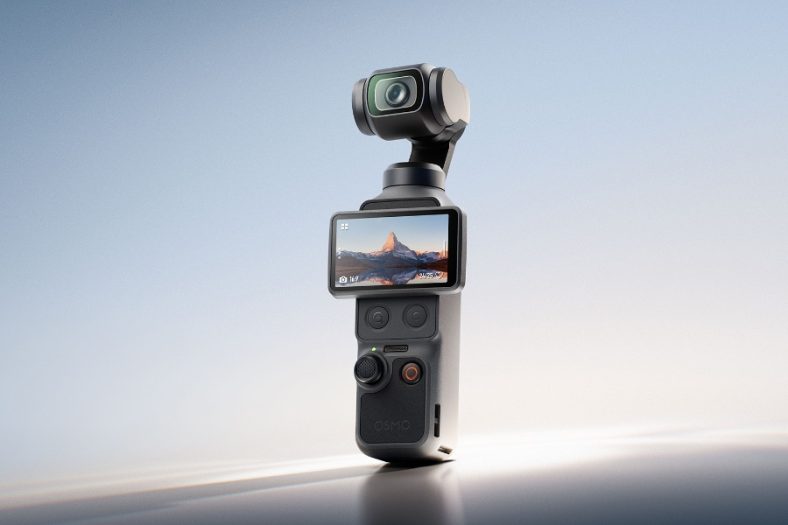
There is a lot to be excited about with the DJI Osmo Pocket 4. The pocket‑sized gimbal camera builds on the winning formula of its predecessor with key internal upgrades: a new 1‑inch sensor offering 14 stops of dynamic range, 4K video at up to 240 frames per second for silky smooth slow‑motion, and 107GB of built‑in storage. For vloggers, content creators and travelers outside the United States, this is an easy recommendation. For those inside the US, the story is more complicated. DJI has stated that the Pocket 4 will not be available in the US market at launch, as the application for FCC authorization is still pending. This review covers everything you need to know about the camera itself, along with what the US availability situation means for potential buyers.
What Is New In The Osmo Pocket 4
Physically, you would struggle to tell the Pocket 4 apart from the Pocket 3. The two cameras are nearly identical in size. The Pocket 4 is marginally bigger and slightly heavier, but it keeps the same 2‑inch rotating OLED screen, the same gimbal mechanism, and the same general design language. The most visible physical change is a pair of new buttons that appear only when the screen is flipped into landscape orientation. One button is a dedicated zoom control, and the other can be customized to trigger a preset action of your choice.
Most of the upgrades are internal. The Pocket 4 still uses a 1‑inch CMOS image sensor with an f/2.0 aperture and a 20mm equivalent field of view, but it is a new version of the sensor. The dynamic range has been boosted to 14 stops, which is a noticeable improvement over the Pocket 3‘s 12 stops. This means better detail retention in both shadows and highlights when shooting in high‑contrast scenes.
The headline feature is the video upgrade. The Pocket 4 can now record 4K video at up to 240 frames per second, double the 4K/120fps limit of the Pocket 3. This allows for 10x slow‑motion playback at 24p or 8x at 30p. For creators who need buttery smooth slow‑motion footage, this is a significant step up.
For photographers, the Pocket 4 captures 37‑megapixel still images, up from the Pocket 3‘s 9.4 megapixels. This makes it a much more capable stills camera than its predecessor.
Image Quality And Video Performance
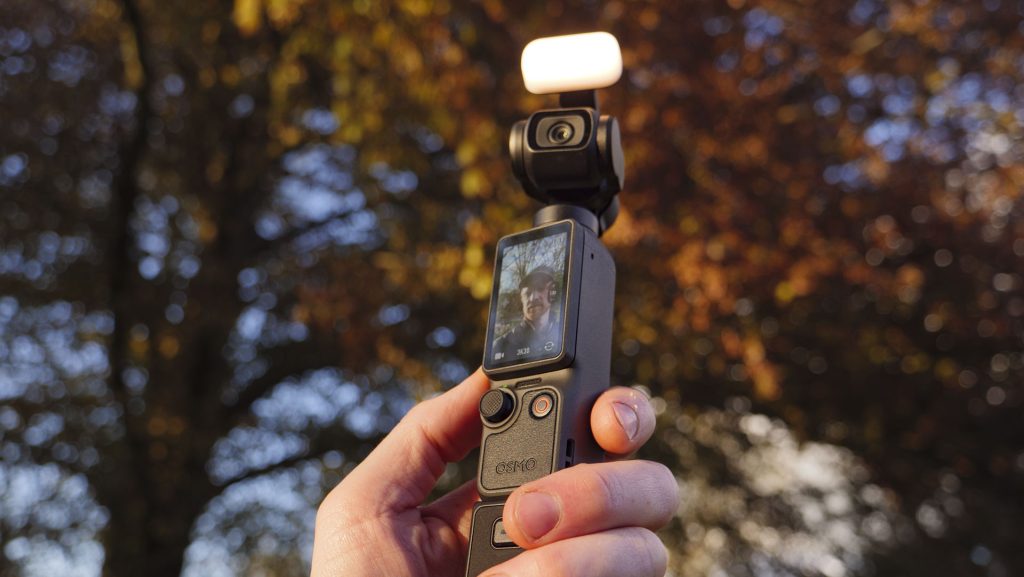
The new sensor and updated image processing deliver excellent video quality. DJI claims improved low‑light performance, and early hands‑on tests show that the camera handles dim conditions well, with reduced noise and more natural skin tones. The native ISO range has been expanded from 50‑6400 to 50‑12,800, which helps in dark environments.
The Osmo Pocket 4 introduces 10‑bit D‑Log recording, which replaces the D‑Log M profile of the Pocket 3. This is a true log profile that gives colorists more flexibility in post‑production, with a flatter image that retains more highlight and shadow detail. For creators who like to grade their footage, this is a welcome upgrade.
DJI has also added six built‑in film simulation profiles, called Film Tones. These include CC Film, NC Film, Pastel, Warm Tone, Movie, and Retro. They are designed to give your clips a stylized, filmic look without the need for post‑processing. The intensity of these effects can be adjusted, so you can go for a subtle grade or a strong creative look.
The three‑axis gimbal remains as smooth and reliable as ever. DJI‘s ActiveTrack 7 subject tracking is included, with improved subject recognition, smoother tracking motion, and better subject re‑acquisition if the subject moves out of frame. Gesture controls allow you to start and stop recording from a distance.
Audio And Connectivity
The Osmo Pocket 4 supports DJI‘s wireless microphone system, including the Mic 2, Mic 3 and Mic Mini transmitters. It can record four channels of audio simultaneously, including spatial audio recording. The built‑in microphone has also been improved, though external mics are still recommended for professional use.
File transfer speeds are rated at up to 800MB/s via USB‑C, which is fast enough for quick dailies. The camera supports live streaming directly to social platforms over Wi‑Fi, though this feature was not tested in the review.
Battery Life And Storage
Battery life is one of the most significant improvements. The Osmo Pocket 4 can record for up to 240 minutes (4 hours) when shooting 1080p video at 24 frames per second. At full 4K resolution, you can expect around 3 hours of continuous recording. Fast charging can bring the battery up to 80 percent in just 18 minutes.
The camera now includes 107GB of built‑in storage, a feature completely absent from the Pocket 3. This is enough for hours of 4K footage, and it is a major convenience for creators who do not want to carry multiple microSD cards. The camera also still accepts microSD cards up to 1TB for expanded storage.
Osmo Pocket 4 Vs Osmo Pocket 3
The table below summarizes the key differences between the two generations.
| Feature | Osmo Pocket 4 | Osmo Pocket 3 |
|---|---|---|
| Sensor | New 1‑inch CMOS | 1‑inch CMOS |
| Dynamic Range | 14 stops | 12 stops |
| Video (max) | 4K at 240 fps | 4K at 120 fps |
| Stills Resolution | 37 MP | 9.4 MP |
| Built‑in Storage | 107GB | None |
| Battery Life (max) | 240 minutes | 166 minutes |
| Log Profile | 10‑bit D‑Log | D‑Log M |
| Film Simulations | 6 (Film Tones) | None |
| Native ISO (max) | 12,800 | 6,400 |
US Availability And The FCC Ban
This is the most important section for American readers. The Osmo Pocket 4 is not available for sale in the United States at launch. DJI has stated that the camera “will not be available in the US market as the application for authorization is still pending.” The situation stems from December 2025, when DJI was added to the FCC‘s Covered List, effectively restricting new DJI products from entering the US market. The Osmo Pocket 4 was submitted to the FCC but did not receive approval before DJI was placed on the list.
For US shoppers, this means you cannot buy the Pocket 4 from official retailers. Importing the camera from overseas is possible, but there are risks. Service and support could be difficult to arrange, and it is unclear whether DJI would honor warranty claims for units sold outside the official US channel. The earlier Osmo Pocket 3 remains available at many US retailers, and it is still a very capable camera. DJI has not provided a timeline for when or if the Pocket 4 might become available in the US.
Pricing And Availability Outside The US
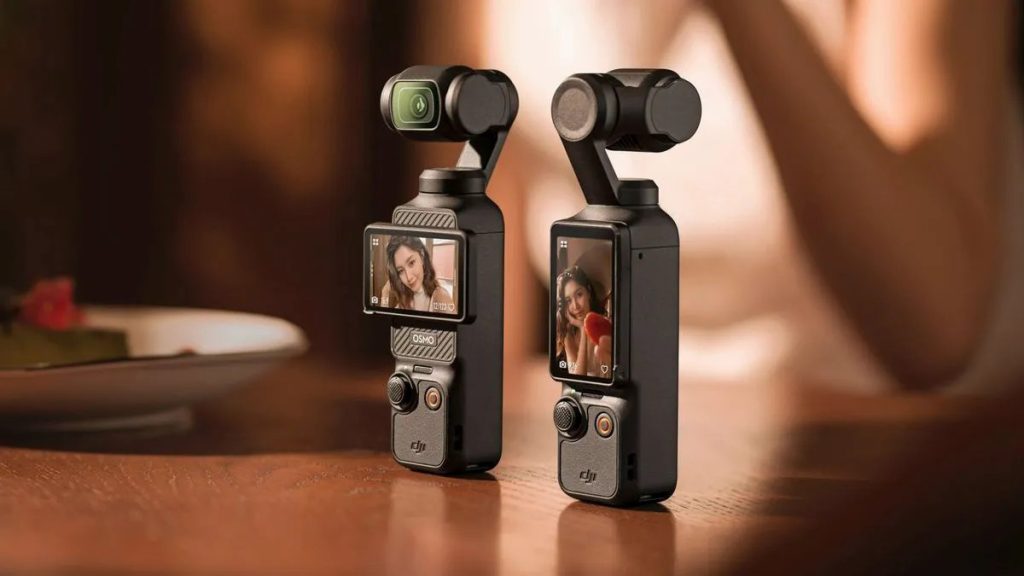
In the United Kingdom, the Osmo Pocket 4 standard combo is priced at 445 British Pounds, which translates to roughly 604 US dollars. The Creator Combo, which includes an attachable fill light, a DJI Mic 3 wireless microphone, a mini tripod, and a wide‑angle lens, costs 549 British Pounds (approximately 745 US dollars). In Australia, pricing starts at 749 Australian dollars for the Essential Combo. In China, the standard combo is priced at 2,999 Chinese yuan. The camera is available for immediate sale in China and for pre‑order in most other regions, with general sales beginning on April 22, 2026. The key exception is the United States, where it is not offered.
Pros And Cons Of The DJI Osmo Pocket 4
Pros
- New 1‑inch sensor delivers 14 stops of dynamic range and 37MP stills.
- 4K video at up to 240fps for ultra‑smooth slow‑motion footage.
- 107GB of built‑in storage plus microSD slot.
- 10‑bit D‑Log true log profile for professional color grading.
- 240‑minute battery life (4 hours) in 1080p mode.
- ActiveTrack 7 subject tracking with improved smoothness and recognition.
- Six built‑in film simulation profiles (Film Tones) for creative looks.
- Fast charging reaches 80 percent in 18 minutes.
- Reliable three‑axis mechanical gimbal stabilization.
- Supports DJI wireless microphones for multi‑channel audio.
Cons
- Not available for sale in the United States at launch.
- Touchscreen menus can feel fiddly on the small 2‑inch display.
- Built‑in microphone is basic compared to external options.
- Physical changes are minimal; Pocket 3 owners may not feel compelled to upgrade.
- Importing to the US could void warranty and support.
- No 4K recording in portrait mode (drops to 3K).
Frequently Asked Questions (FAQs)
Why is the DJI Osmo Pocket 4 not available in the US?
The camera has not received FCC authorization. DJI was added to the FCC‘s Covered List in December 2025, and new products submitted after that date have faced delays. DJI states that the application is “still pending,” but there is no confirmed timeline for approval.
Can I import the Osmo Pocket 4 into the US?
It is technically possible to buy the camera from overseas retailers and have it shipped to the US. However, there may be risks. Service and repair support could be difficult to obtain, and DJI‘s warranty may not cover units sold outside official US channels.