



Table of Contents
Introduction
ADO, short for A Dece Oasis, has become one of the more interesting names in the folding electric bike market. The brand, with European headquarters in Düsseldorf, has built its reputation on lightweight frames, automatic gearing, carbon belt drives, and integrated smart features, all at prices that undercut established competitors like Brompton and GoCycle. Independent reviewers have praised models like the Air Carbon Pro as “pound for pound, the best folding e-bike” they have ever reviewed, while the Air 20 Ultra earned a five-star rating from Electroheads.
But a closer look at owner experiences reveals a more complicated picture. There are credible reports of motors failing within weeks, rear hubs breaking after just seven kilometers, and a customer service process that leaves buyers frustrated and out of pocket. This review separates the engineering from the ownership experience so you can decide whether ADO is the right choice for your commute.
What Is ADO?
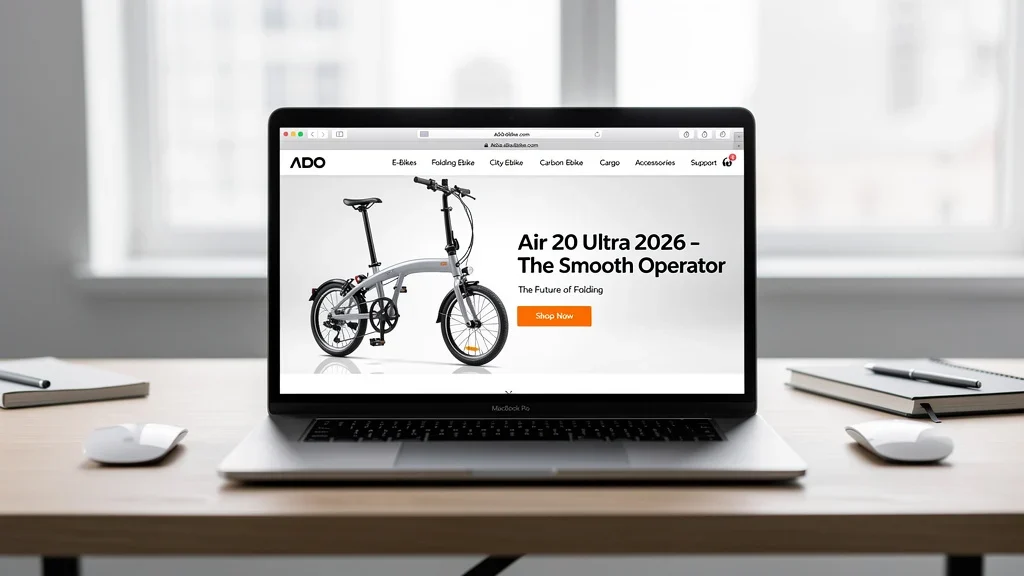
ADO (A Dece Oasis) is a Chinese electric bike manufacturer with a European base in Düsseldorf, Germany. The company specializes in compact, folding e-bikes designed for urban commuters and mixed-mode travel, with a strong emphasis on lightweight construction and low-maintenance components.
Key aspects of the brand include:
- European headquarters in Düsseldorf, Germany, with global distribution
- Focus on folding e-bikes for city commuting and multi-modal transport
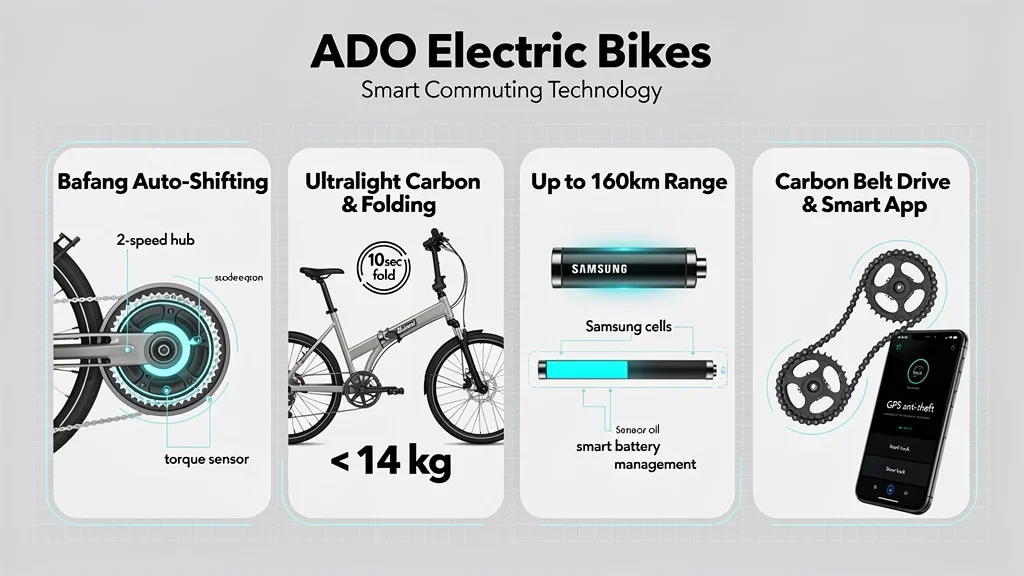
- Signature features include carbon belt drives, automatic gearing, and integrated batteries
- Uses Bafang and Mivice hub motors across the range
- Offers smart features like GPS tracking, app connectivity, and NFC unlocking
- Warranty covers the frame for 5 years, with most components covered for 1 year
The brand’s pitch is straightforward: the convenience of a folder without the maintenance headaches of a chain and derailleur, at a price that makes premium engineering accessible.
Product Range and Categories
ADO’s catalogue is organized around a few core platforms, with variations in wheel size, frame material, and component spec. Understanding the differences matters, because the models serve different riders and use cases.
The Air 20 Series is the brand’s volume line. The Air 20 Ultra (£1,499–£1,699) is the sweet spot, with a 250W Bafang motor, a 37V 10Ah battery, a carbon belt drive, and an automatic three-speed hub. The Air 20 Pro and Air 20S Lite sit below it, with the Lite positioned as a lighter, simpler city bike.
The Air 30 Ultra (£1,499–£1,799) moves to 700C wheels and a more upright riding position. It uses the same automatic three-speed Bafang system but adds a larger frame, hydraulic disc brakes, and integrated turn signals.
The Air Carbon Pro (£1,999–€2,499) is the flagship. It uses a full carbon frame, weighs just 16.2–16.5 kg, and pairs a 250W Bafang motor with 50Nm of torque and an automatic two-speed gearbox. It also includes a hidden GPS tracker and a battery integrated into the seatpost.
The Air One Pro (€1,799) is a compact cargo-oriented low-step frame with a 150 kg payload, turn signals, and a 370Wh battery in the seatpost.
The A20F Beast is a fat-tire folder with a 20×4 inch tire, a 250W motor with 65Nm of torque, and a 36V 14.5Ah battery, positioned for mixed terrain and heavier riders.
| Model | Price Range | Key Feature | Best For |
|---|---|---|---|
| Air 20 Ultra | £1,499–£1,699 | Automatic 3-speed, carbon belt | City commuters |
| Air 30 Ultra | £1,499–£1,799 | 700C wheels, turn signals | Longer urban rides |
| Air Carbon Pro | £1,999–€2,499 | Carbon frame, 16.5 kg | Weight-conscious commuters |
| Air One Pro | €1,799 | 150 kg payload, turn signals | Cargo and family use |
| A20F Beast | CAD $1,799+ | Fat tires, 65Nm torque | Mixed terrain |
Build Quality and Materials
Build quality is where ADO value proposition is strongest, at least on the surface. Reviewers consistently praise the frame construction, the quality of the folding hinges, and the refinement of the component spec relative to the price.
The Air 20 Ultra’s frame is described as having “a solidity to it that’s very reassuring,” with folding hinges that are “well-engineered with locking catches” and a suspension fork that is better than expected at this price point. The Air Carbon Pro’s carbon frame is called “impeccable” in design and build quality, with neat cable routing and a battery that integrates cleanly into the seatpost.
| Component | Feedback |
|---|---|
| Frame and hinges | Solid, well-engineered, reassuring |
| Carbon belt drive | Low maintenance, clean, quiet |
| Bafang motor | Good power delivery, but reliability varies |
| Battery integration | Clean, but some reports of connection issues |
| Hydraulic brakes | Strong and consistent on higher-end models |
| Quality control | Inconsistent across units |
Design and Real-World Usability
ADO design philosophy centers on practicality rather than vanity. The bikes are meant to be folded, carried, stored, and ridden in ordinary clothes. That focus is reflected in the details.
The folding mechanism is consistently praised as intuitive and quick. The Air Carbon Pro folds to roughly 87 × 48 × 66 cm, which is compact enough for a car boot or a train luggage rack. The Air 20 Ultra folds in about 15 seconds, according to ADO’s own materials, and fits under a luggage rack on a train.
The automatic gearing is the defining feature of the Air 20 and Air 30 Ultra models. It shifts seamlessly to match your speed and terrain, which removes the mental load of gear management and makes the bike feel simpler to ride, especially in stop-start city traffic. The torque sensor provides a natural assistance feel, kicking in quickly from a standstill.
The trade-offs are equally clear. The automatic gearing can feel restrictive when you want to push past the 15.5 mph assist limit, and some reviewers note that the bike changes up a gear more readily than it changes down. The Air 20 series is not the lightest folder at around 19–20 kg, and the fold, while effective, is not the smallest. The Air Carbon Pro addresses the weight issue at 16.2–16.5 kg, but at a significantly higher price.
The app experience is a weak point. Multiple users describe the ADO app as “unreliable, unstable, and frequently disconnects,” with navigation on the bike display that “simply does not work properly”. The hardware is generally good; the software is not.
Pricing and Value
ADO’s pricing is competitive, but it is not the bargain-bin pricing some direct-to-consumer brands rely on. These are mid-range bikes with mid-range price tags, and the value case depends on which model you choose.
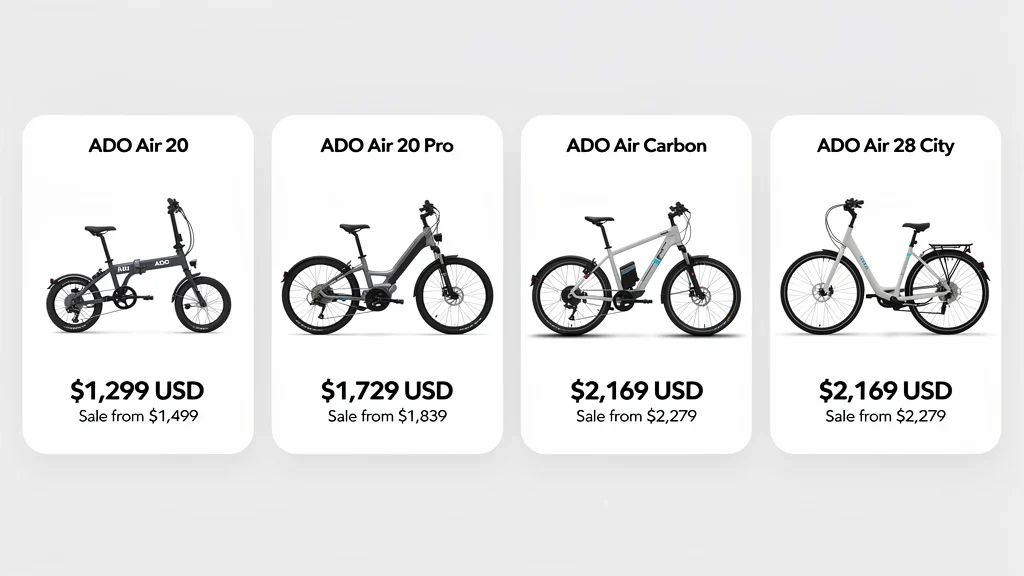
Published pricing (approximate, varies by region and promotion):
- Air 20 Ultra: £1,499–£1,699
- Air 30 Ultra: £1,499–£1,799
- Air Carbon Pro: £1,999–€2,499
- Air One Pro: €1,799
- A20F Beast: CAD $1,799+
| Model | Price | Value Assessment |
|---|---|---|
| Air 20 Ultra | £1,499–£1,699 | Strong — automatic gearing and belt drive at a fair price |
| Air 30 Ultra | £1,499–£1,799 | Good — larger wheels and turn signals for urban riding |
| Air Carbon Pro | £1,999–€2,499 | Premium, but justified by the carbon frame and low weight |
| Air One Pro | €1,799 | Niche — the cargo capacity justifies the price for the right user |
| A20F Beast | CAD $1,799+ | Fair for a fat-tire folder with 65Nm torque |
The Air Carbon Pro’s value case is particularly strong when compared to the competition. At £1,999, it is almost half the price of a similarly weighted Brompton P line and £700 less than a 25-kg Cube Comfort 500, while offering a higher spec and a much lighter package. For a rider who needs a genuinely light folder and can afford the premium, the Carbon Pro is a compelling proposition.
The value case is weaker for the entry-level Air 20S Lite, which competes with cheaper Chinese folders that offer similar specs without the brand’s refinement. ADO’s advantage is in the mid-range, where the automatic gearing and belt drive deliver a genuinely different ownership experience.
Customer Experience: The Reliability Question
This is the part of the ADO story that any honest review must confront directly. The bikes are generally well-reviewed by journalists, but the ownership experience is far more variable, and the customer service record is a serious concern.
Reliability issues: A Trustpilot reviewer described a carbon Air bike that “came faulty” and was refused a replacement, then “stopped working completely” shortly after. Another complaint on Testachats described a rear hub that “breaks after 7km” on a new bike used normally on flat ground. A review on Shop.com noted that the range “falls very far short of the claimed 100 km” and criticized the use of plastic zip ties to bundle wires.
Customer service: The same Trustpilot reviewer stated that “customer service… would be very difficult to compromise” and that “they take ages to come back”. A Testachats complaint described a situation where the bike was unusable within the 30-day return window due to a manufacturer defect, but the company refused a refund because the period had elapsed, leaving the buyer with a bike they did not trust.
App and software: The ADO app is a recurring pain point. Reviewers describe it as “clunky,” “unreliable,” and “unstable,” with navigation features that “simply does not work properly”. The hardware is capable; the software ecosystem is not.
Warranty structure: ADO offers a 5-year frame warranty and a 1-year warranty on most other components, with a 2-year limited warranty on some models depending on region. The terms are reasonable on paper, but the experience of claiming them is inconsistent.
| Platform | Rating / Feedback |
|---|---|
| Trustpilot | Mixed — praise for design, complaints about reliability and support |
| Electroheads | 4–5 stars on reviewed models |
| T3 | 5 stars for Air Carbon Pro |
| Testachats | Complaint of hub failure at 7 km and refund refusal |
| ADO | Range falls short of claims; app issues |
Pros and Cons
| Pros | Cons |
|---|---|
| Lightweight frames, especially the Carbon Pro (16.5 kg) | Inconsistent quality control and premature failures |
| Automatic gearing and carbon belt drive reduce maintenance | Customer service is slow and inflexible, per multiple reports |
| Solid folding mechanism that is quick and intuitive | App is unreliable and navigation often fails |
| Good value in the mid-range compared to premium folders | Range often falls short of ADO’s claims |
| Integrated smart features like GPS tracking | Some models are heavier than the “Air” name suggests |
| 5-year frame warranty | Component warranty is only 1 year |
| Strong independent reviews for performance | Real-world reliability varies significantly between units |
ADO vs. Standard Brands
How does ADO compare to the established players in the folding e-bike market?
| Feature | ADO Air Carbon Pro | Brompton P Line | GoCycle G4 | Decathlon Folding E-Bike |
|---|---|---|---|---|
| Price | ~£1,999 | ~£3,879 | ~£3,999 | ~£1,299 |
| Weight | 16.2–16.5 kg | ~15 kg | ~17 kg | ~22 kg |
| Frame Material | Carbon | Steel | Aluminum | Aluminum |
| Drive | Carbon belt, auto 2-speed | Chain, 4-speed | Chain, auto 2-speed | Chain, 7-speed |
| Fold Size | Compact | Very compact | Compact | Compact |
| Smart Features | GPS, app, NFC | Minimal | App, GPS | Minimal |
| Best For | Weight and value | Ultimate compactness | Premium ride | Budget commuting |
ADO’s advantage is clear: it delivers carbon-frame weight and automatic gearing at roughly half the price of a Brompton or GoCycle. The trade-off is that Brompton and GoCycle have decades of refinement and more consistent quality control. For a buyer who prioritizes weight and value over brand heritage, ADO is a strong contender. For a buyer who needs proven reliability and dealer support, the established brands are safer.
Verdict and Final Thoughts
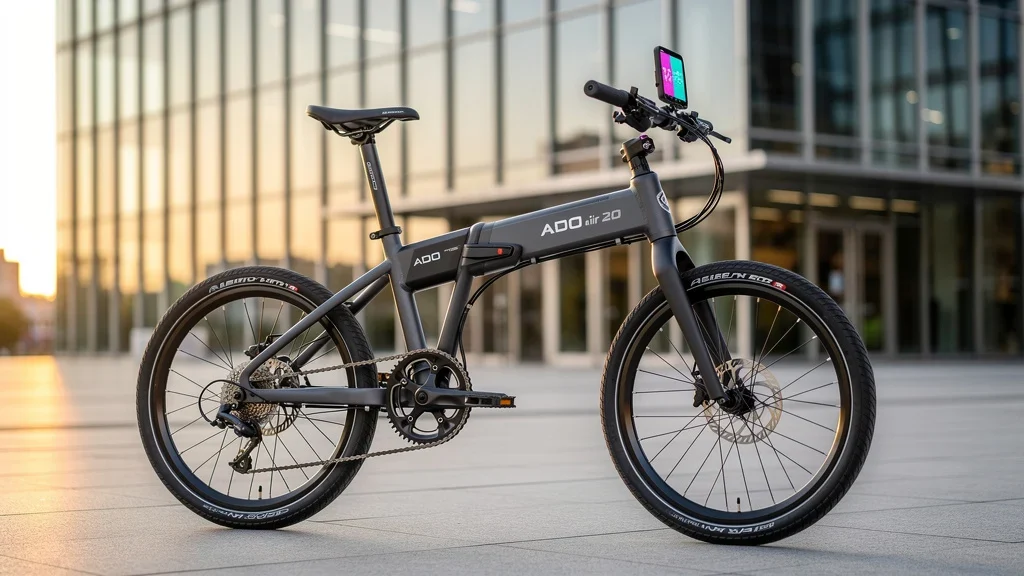
ADO has built a genuinely interesting range of folding e-bikes that challenge the assumption that lightweight, low-maintenance folders have to cost Brompton money. The Air 20 Ultra and Air Carbon Pro are the standouts: the former for its automatic gearing and belt drive at a fair price, the latter for its remarkable 16.5 kg carbon frame and 50Nm of torque. Independent reviewers have rightly praised the ride quality, the folding mechanism, and the value proposition.
The problem is that the ownership experience does not always match the review experience. There are credible reports of motors failing, hubs breaking, and customer service that is slow to respond and inflexible when things go wrong. The app is a weak point that undermines the bike’s smart features. And the range claims are optimistic, which matters for riders who plan longer trips.
Who is ADO best for?
- City commuters who want a lightweight folder with automatic gearing and low maintenance
- Riders who prioritize value and are willing to buy from a direct-to-consumer brand
- Weight-conscious buyers considering the Air Carbon Pro
- Multi-modal travellers who need a bike that folds quickly for trains and buses
Who should look elsewhere?
- Buyers who need proven reliability and local dealer support
- Anyone uncomfortable with direct-to-consumer warranty processes
- Riders who need accurate range estimates for long commutes
- People who rely on app-based navigation and smart features
Overall, ADO is worth considering if you buy through a retailer with strong buyer protection, test the bike thoroughly within the return window, and go in with realistic expectations about the ownership experience. The engineering is genuinely good; the business around it is not yet consistent enough to recommend without caveats.
Considering ADO? Check the return policy and warranty terms carefully, and consider buying through a local retailer or a platform with robust buyer protection.
Scorecard
| Category | Rating |
|---|---|
| Design & Build Quality | ⭐⭐⭐⭐½ |
| Ride Performance | ⭐⭐⭐⭐½ |
| Value for Money | ⭐⭐⭐⭐⭐ |
| Reliability | ⭐⭐⭐⭐½ |
| Customer Support | ⭐⭐⭐⭐ |
| App & Smart Features | ⭐⭐⭐⭐ |
| Overall Rating | 4.4/5 |