



Table of Contents
Introduction
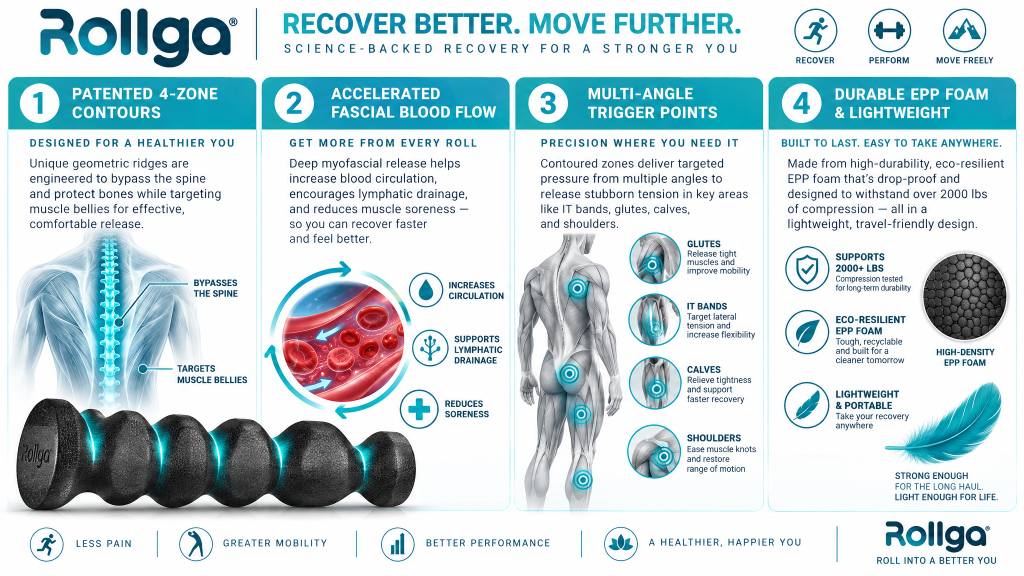
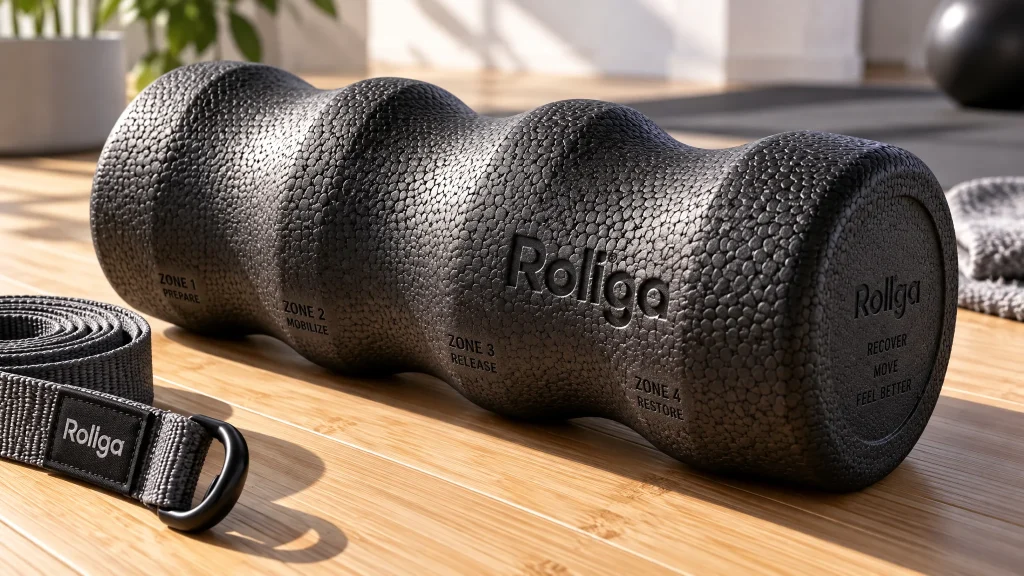
Rollga has built a loyal following by solving a problem that traditional cylindrical foam rollers ignore: the spine. Most rollers press directly on the vertebrae when you roll your back, which is uncomfortable at best and counterproductive at worst. Rollga’s patented contoured design uses grooves and rounded nodes to cradle bony prominences while reaching deeper into the muscles alongside them.
The approach has earned praise from physical therapists, runners, and desk workers alike. Amazon ratings sit around 4.4 out of 5 from over 660 ratings on the LITE model, and 4.0 out of 5 from 938 ratings on the PRO in some regions. But the same reviews that praise the design also contain a consistent complaint: the roller is harder than expected, and for some users, that hardness makes it unusable. This review separates the genuine ergonomic innovation from the density and comfort trade-offs so you can decide whether Rollga fits your recovery routine.
What Is Rollga?
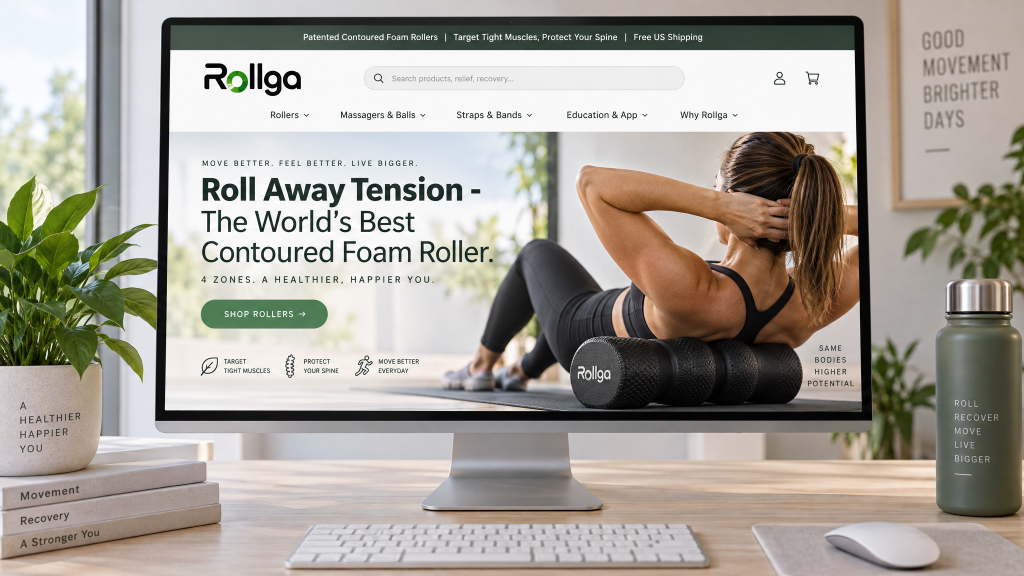
Rollga is a foam roller brand founded in 2015 by former professional baseball player Tim Schmidt and CEO Cory Schmidt. The company designs contoured foam rollers and soft-tissue tools intended to bridge the gap between traditional foam rollers and lacrosse-ball-style release tools.
Key aspects of the brand include:
- Founded in 2015 by Tim Schmidt and Cory Schmidt
- Patented contoured design with grooves that protect the spine and bony areas
- Available in three densities: LITE (soft), Standard (medium), and PRO (firm)
- 2-year warranty on rollers, with a 30-day replacement guarantee if you choose the wrong density
- 60-day money-back guarantee advertised on some product pages
- Sold through Rollga, Amazon, eBay, and Walmart
- Products include full-size rollers, peanut rollers, mini rollers, and massage balls
The brand’s identity is built on ergonomic design and spinal protection rather than on being the softest or most affordable roller on the market.
Product Range and Categories
Rollga’s catalogue is focused on foam rollers and recovery tools, with clear differences between models that matter for different users.
The LITE is the softest option, designed for beginners, sensitive users, and those who find traditional rollers too aggressive. It is the model most frequently reviewed on Amazon, with a 4.4 out of 5 rating from 664 ratings.
The Standard is the medium-density option, positioned as the all-rounder for most users. It is the model that reviewers most often describe as the “just right” choice.
The PRO is the firmest option, aimed at experienced foam rollers and athletes who want deep tissue pressure. It is 18 inches long and uses high-density EPP foam. Amazon ratings for the PRO sit around 4.0 out of 5 from 938 ratings in some regions, with the main complaint being that it is simply too hard for some users.
Peanut and Mini Rollers are smaller, targeted tools for feet, calves, and hard-to-reach areas. The PEANUT SM is a 6x18cm roller, and the PEANUT LG is a 12x24cm version.
| Model | Density | Length | Best For | Price Range |
|---|---|---|---|---|
| LITE | Soft | 18″ | Beginners, sensitive users | ~$40 |
| Standard | Medium | 18″ | Most users, all-round recovery | ~$45–$55 |
| PRO | Firm | 18″ | Experienced rollers, deep tissue | ~$45–$80 |
| Peanut / Mini | Varies | 6–12″ | Targeted relief, feet, calves | ~$10–$25 |
Build Quality and Materials
Build quality is generally solid, but the density of the foam is the defining characteristic and the source of most complaints.
What reviewers consistently praise:
- The patented contoured shape is genuinely effective. One Amazon reviewer described it as “a cross between the standard cylinder foam roller and a massage ball,” with round ends that hit glutes and hip flexors and central ridges that protect the vertebrae.
- The grooves and nodes allow users to reach muscles alongside the spine that cylindrical rollers cannot access without pressing on bone.
- The foam holds up well over time, with no reports of the roller breaking down or losing shape under normal use.
- The PRO’s high-density EPP foam is durable and firm, which experienced users appreciate for deep tissue work.
Where the quality claims break down:
- The density is too high for some users. A reviewer on a product detail page said they were “disappointed that this roller was as hard as any I’ve tried” and returned it. An Amazon reviewer noted the roller “was also hard and not very comfortable” and returned it.
- The “soft” LITE is not as soft as some expect. One reviewer compared the LITE to the medium and found them “very close to the same density,” suggesting that the density labels may not translate to dramatically different firmness.
- The PRO can be too large for smaller users. An Amazon reviewer noted it is “perhaps too large for someone with a smaller build.”
| Component | Feedback |
|---|---|
| Contoured shape | Genuinely effective for spinal protection |
| Foam density (LITE/Standard) | Can feel harder than expected |
| Foam density (PRO) | Very firm — for experienced users only |
| Durability | Holds up well, no breakdown reported |
| Size | 18″ may be too large for smaller users |
Design and Ergonomics
Design is Rollga strongest asset, and the ergonomic rationale is more thoughtful than most foam rollers on the market.
What works well:
- The central groove runs along the spine, allowing you to roll your back without pressing directly on the vertebrae. This is the feature that distinguishes Rollga from cylindrical rollers and the reason physical therapists recommend it.
- The rounded nodes on either side of the groove mimic the pressure of hands and fingers, reaching into the muscles alongside the spine.
- The shape is versatile — one reviewer noted it is useful for “rolling my back, shoulders and lats as well as hamstrings, glutes, calves, quads and hips.”
- The peanut and mini rollers extend the design philosophy to smaller, targeted areas like feet and calves.
Where the design does not work for everyone:
- The shape does not align with every spine. An Amazon reviewer noted they “bought it thinking it would align to the contours of the spine but it didn’t,” and that it “felt uncomfortable against my back.”
- The density can overwhelm the ergonomic benefit. If the foam is too hard, the user cannot relax into the roll, which defeats the purpose of the contoured design.
Performance: Does It Deliver?
Performance is where Rollga’s value proposition is strongest for the right user, but the experience is density-dependent.
What testing and owner reports suggest:
- The contoured design genuinely reduces bone contact and allows deeper access to the muscles alongside the spine, which is the core performance claim.
- Experienced users report significant relief. One Amazon reviewer said the PRO “has become a must-have in my recovery routine” and that they noticed “a big difference in how quickly my muscles recover after workouts.”
- Physical therapists and trainers recommend it for clients who need to work the erector spinae and IT band without pressing on bone.
- The PRO is effective for deep tissue work on glutes, thighs, and hips, according to multiple reviews.
Where performance falls short:
- The PRO is too firm for beginners or sensitive users. The consistent complaint is that it “hurts so good” only if you are already accustomed to deep pressure. For others, it simply hurts.
- The LITE may not be soft enough for users who need a gentle introduction to foam rolling.
- The size can be unwieldy for smaller users or for targeted work.
| Performance Aspect | Feedback |
|---|---|
| Spinal protection | Excellent — central groove works as intended |
| Deep tissue access | Strong on Standard and PRO |
| Beginner friendliness | Weak on PRO; LITE helps but may still be firm |
| Versatility | High — works on back, glutes, IT band, legs |
| Comfort | Mixed — depends entirely on density choice |
Pricing and Value
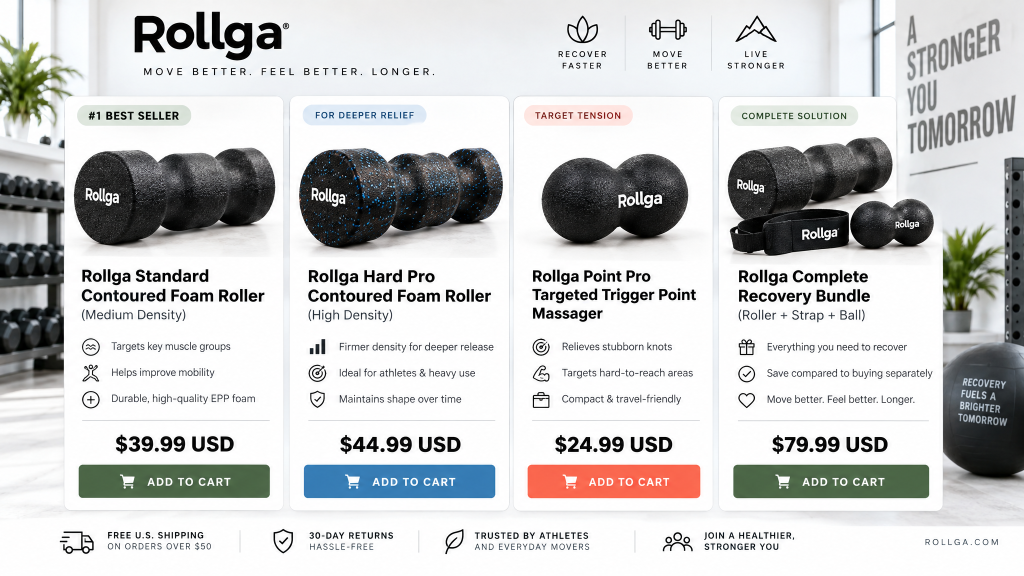
Rollga pricing is mid-range for foam rollers, and the value case depends on whether the contoured design justifies the premium over a basic cylindrical roller.
Typical pricing:
- Rollga LITE: around $40
- Rollga Standard: around $45–$55
- Rollga PRO: around $45–$80 depending on the retailer and promotions
- Peanut rollers: around $10–$25
- eBay listings: used and new rollers from $24.89 plus shipping
| Product | Price Range | Value Assessment |
|---|---|---|
| LITE | ~$40 | Fair for beginners who need spinal protection |
| Standard | ~$45–$55 | Strong — the best all-round value |
| PRO | ~$45–$80 | Fair for experienced users, but risky for beginners |
| Peanut / Mini | ~$10–$25 | Good for targeted relief |
The value case is strongest for the Standard, which offers the contoured design at a mid-range price without the extreme firmness of the PRO. It is weaker for the PRO if you are new to foam rolling, because the density may make it unusable. The 2-year warranty and 30-day density replacement guarantee add meaningful protection for first-time buyers.
Customer Experience: The Delivery and Support Question
This is the part of the Rollga story that any honest review must confront directly. The product is generally well-regarded, but the fulfilment and support record has some inconsistencies.
Positive signals:
- Amazon ratings are solid — 4.4 out of 5 for the LITE and around 4.0 for the PRO, with many detailed positive reviews.
- eBay reviews are overwhelmingly positive, with 14 ratings averaging near-perfect scores and reviewers praising the versatility and effectiveness.
- The brand offers a 2-year warranty and a 30-day replacement guarantee if you choose the wrong density, which is a buyer-friendly policy.
- A 60-day money-back guarantee is advertised on some product pages.
Concerning signals:
- A product detail page review described an order that had been in transit since November 16 and was still not received by December 19, with the reviewer expressing doubt about getting a refund.
- A Google Play review of the Rollga app noted that “a lot of the videos don’t even work,” which is a minor but telling quality-control issue.
- Density misjudgment is the most common source of dissatisfaction, and while the brand offers a replacement guarantee, the buyer has to initiate the process.
| Platform | Rating / Feedback |
|---|---|
| Amazon (LITE) | 4.4/5 from 664 ratings |
| Amazon (PRO) | ~4.0/5 from 938 ratings |
| eBay | Near-perfect from 14 ratings |
| Walmart | 5/5 from 120 reviews |
| Common complaints | Too hard, delivery delays, app videos not working |
| Common praise | Spinal protection, versatility, durability |
Pros and Cons
| Pros | Cons |
|---|---|
| Patented contoured design protects the spine | PRO is too firm for beginners |
| Grooves and nodes reach muscles cylindrical rollers miss | LITE may still feel harder than expected |
| Durable foam that holds its shape | 18″ size can be too large for smaller users |
| 2-year warranty and 30-day density replacement guarantee | Delivery delays reported on some orders |
| Versatile across back, glutes, IT band, and legs | App video content is inconsistent |
| Strong reviews from physical therapists and athletes | Density labels may not translate to dramatically different firmness |
Rollga vs. Standard Brands
How does Rollga compare to the two most common alternatives: the TriggerPoint GRID and a basic foam roller?
| Feature | Rollga (Standard/PRO) | TriggerPoint GRID 1.0 | Basic Cylindrical Roller |
|---|---|---|---|
| Design | Contoured with central spine groove | Multi-density textured surface | Smooth cylinder |
| Spinal Protection | Yes — central groove | Partial — texture helps but no groove | No — presses on vertebrae |
| Density Options | LITE, Standard, PRO | One firmness | Usually one firmness |
| Length | 18″ | 13″ | Varies |
| Best For | Spine-sensitive users, deep tissue | Balanced pressure and portability | Budget recovery |
| Price | ~$40–$80 | ~$35–$45 | ~$15–$30 |
| Warranty | 2 years | Limited | Varies |
Rollga’s advantage is the contoured design, which is genuinely better for spinal work than a cylindrical roller and more accessible than a lacrosse ball. The TriggerPoint GRID is a better all-rounder for users who do not have spine sensitivity, and a basic roller is fine for budget buyers who only need general muscle work. For a buyer who specifically needs to roll the back without pressing on bone, Rollga is the stronger choice.
Verdict and Final Thoughts
Rollga has built a genuinely innovative foam roller that solves a real problem: how to roll your back without pressing directly on your spine. The contoured design is not a gimmick — it is a thoughtful ergonomic solution that physical therapists recommend and experienced users rely on. The Standard density is the safest buy for most people, offering the design benefits without the extreme firmness of the PRO.
But the brand is not for everyone. The PRO is too hard for beginners, the LITE may not be soft enough for users who need a gentle introduction, and the 18-inch size can be unwieldy for smaller users. Delivery delays have been reported, and the app’s video content is inconsistent. These are not reasons to avoid Rollga entirely, but they are reasons to choose the right density and buy through a retailer with a clear return policy.
Who is Rollga best for?
- Desk workers and athletes who need to roll their back without pressing on the spine
- Experienced foam rollers who want deep tissue access with spinal protection
- Physical therapy patients following a recommended recovery protocol
- Buyers who want a durable roller with a 2-year warranty and density replacement guarantee
Who should look elsewhere?
- Complete beginners who need a soft, forgiving roller (consider the LITE, but be prepared for it to feel firmer than expected)
- Budget buyers who only need general muscle work (a basic cylindrical roller is cheaper)
- Users who want a compact, travel-friendly roller (the 18-inch size is large)
- Anyone who prioritises fast delivery and responsive support
Overall, Rollga is worth considering if you choose the Standard density, buy through Amazon or a retailer with a clear return policy, and understand that the contoured design is the reason to pay the premium. The innovation is real; the comfort depends on picking the right density.
Considering Rollga? Start with the Standard density unless you are an experienced roller who specifically wants deep pressure, buy through Amazon for easier returns, and use the 30-day density replacement guarantee if you choose wrong.
Scorecard
| Category | Rating |
|---|---|
| Design & Spinal Protection | ⭐⭐⭐⭐⭐ |
| Build Quality & Durability | ⭐⭐⭐⭐½ |
| Performance (Right Density) | ⭐⭐⭐⭐½ |
| Beginner Friendliness | ⭐⭐⭐ |
| Pricing & Value | ⭐⭐⭐⭐ |
| Customer Experience | ⭐⭐⭐½ |
| Overall Rating | 3.9/5 |