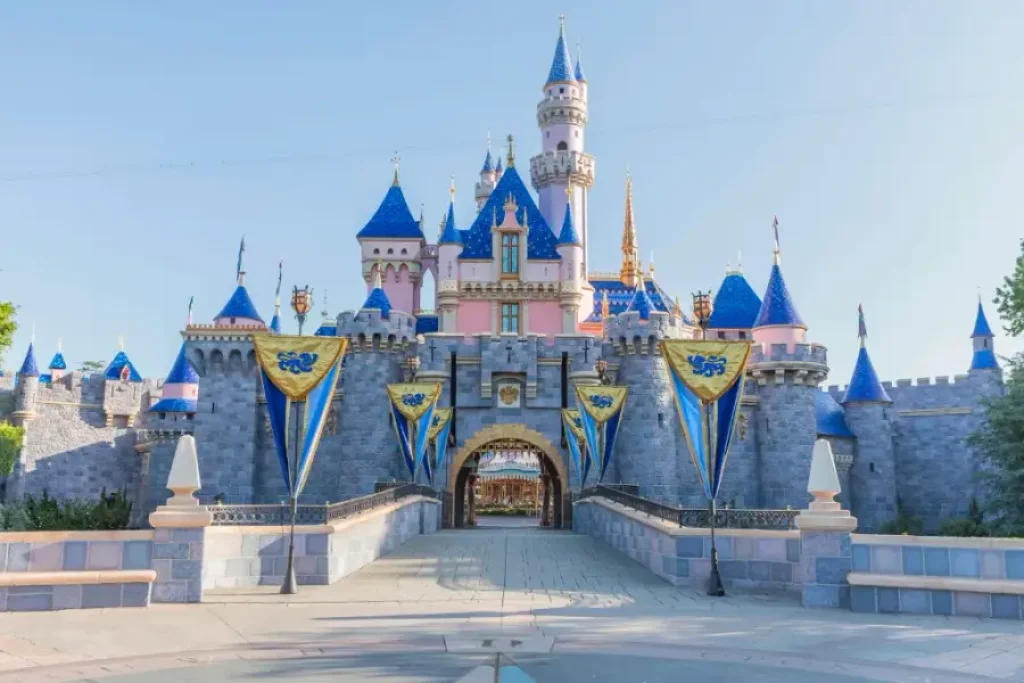
For visitors to California’s Disneyland amusement park, there is now a technological question posed to everyone before they can get through the gates: Do you want your face biometrically scanned? Disneyland previously tested facial scanning technology at its entrances to reduce ticket and pass fraud. It has now officially launched the program, with some lines to enter Disneyland and California Adventure requiring a biometric photo comparison of visitors’ faces. Disney says the face scanning is optional, and there are also lines that take a photo of a customer’s face but do not scan it for face recognition. Those lines are fewer in number than the lines that do facial recognition.
How Disneyland Facial Recognition Works
In a post on the company website, Disney explained that photos taken for facial recognition are converted to a numeric value and then compared with photos that were previously taken when a ticket or pass was first used. The numeric data, the company says, is deleted within 30 days except in cases where there is a legal or fraud prevention purpose for keeping it. Children under 18 can be facially scanned with their parent or guardian’s consent. With this technology, Disney hopes to crack down on visitors who hand off their passes or tickets to another person on reentry.
Privacy Concerns And Unanswered Questions
Privacy experts have warned that facial recognition technology poses as many thorny ethical issues as the practical issues the scanning hopes to address. Among the many questions raised are what companies do with the facial data they collect, how long they plan to keep it, whether they could repurpose or sell it, and if it will be shared with law enforcement. In its post, Disney did not address what it does with the digital photos themselves, only with the numeric data generated from them. A representative for Disney did not immediately respond to a request for comment.
Other Venues Using Facial Recognition
According to news reports, the Disney parks are just one of several high traffic venues in the Los Angeles area using facial recognition. Sports stadiums in the area also use the technology to enable facial recognition for entry, bypassing the need to scan a physical or digital ticket. Some stadium technology may also verify whether a visitor is over 21 using facial data. This indicates a broader trend toward biometric scanning at entertainment venues.
Universal Studios Orlando Approach
Blogs covering theme park trends have been following the story. Universal Studios Orlando calls its scanning Photo Validation and promotes it as a way to enter parks and use lockers faster and more easily than scanning a ticket. Florida has a more tech forward, convenience focused approach that tends to see quicker adoption and less public outcry compared to California, which has stricter privacy laws on facial recognition. At Walt Disney World in Florida, fingerprint biometrics are used to validate IDs alongside tickets and annual passes, though it has yet to introduce facial recognition technology.
Pros And Cons
Pros
- Helps reduce ticket and pass fraud by verifying that the person using a pass is the rightful owner
- Optional program with non scanning lines available for those who opt out
- Numeric data is deleted within 30 days according to Disney
- Can speed up entry for visitors who choose to use it
- Children under 18 are allowed only with parent or guardian consent
- Similar technology is already in use at sports stadiums
Cons
- Privacy experts warn of ethical issues with facial recognition technology
- Disney did not clarify what happens to the digital photos themselves, only the numeric data
- Unknown whether data could be shared with law enforcement
- Non scanning lines are fewer in number than facial recognition lines
- Visitors may feel pressured to use the scanning lines due to shorter wait times
- Lack of transparency about long term data use and potential repurposing
Frequently Asked Questions (FAQs)
1. Is facial recognition mandatory at Disneyland?
No, Disney says the face scanning is optional. There are separate lines that do not use facial recognition.
2. How long does Disney keep facial recognition data?
Disney states that numeric data generated from facial scans is deleted within 30 days, unless there is a legal or fraud prevention reason to keep it longer.
3. Can children be scanned at Disneyland?
Children under 18 can be facially scanned only with the consent of a parent or guardian.
4. Does Walt Disney World in Florida use facial recognition?
Not yet. Walt Disney World currently uses fingerprint biometrics to validate IDs alongside tickets and annual passes.
5. Does Universal Studios use facial recognition?
Universal Studios Orlando uses a system called Photo Validation for faster entry and locker access.
6. What is Disney trying to prevent with facial recognition?
Disney aims to crack down on visitors who hand off their passes or tickets to another person upon reentry.
7. What happens to my photo after scanning?
Disney has not clearly stated what happens to the digital photos themselves, only that numeric data is deleted within 30 days.