Intel announced its Core Ultra Series 3 mobile chips at CES 2026, based on the Panther Lake architecture first revealed in October 2025. The new chips feature Xe3 graphics cores (codenamed 12Xe) that promise significantly better performance at lower power draw than the Xe2 generation used in Lunar Lake chips. The move to Intel‘s smaller 2nm 18A process node should result in better overall performance and notably lower power consumption. Intel claims up to 27 hours of battery life for streaming video on Arc Pro equipped systems. The first systems with Series 3 processors begin shipping immediately, with preorders opening on Tuesday. This review covers the new architecture, graphics improvements, battery life claims and the future handheld gaming platform.
Panther Lake Architecture: 2nm Process Node And Modular GPU Design
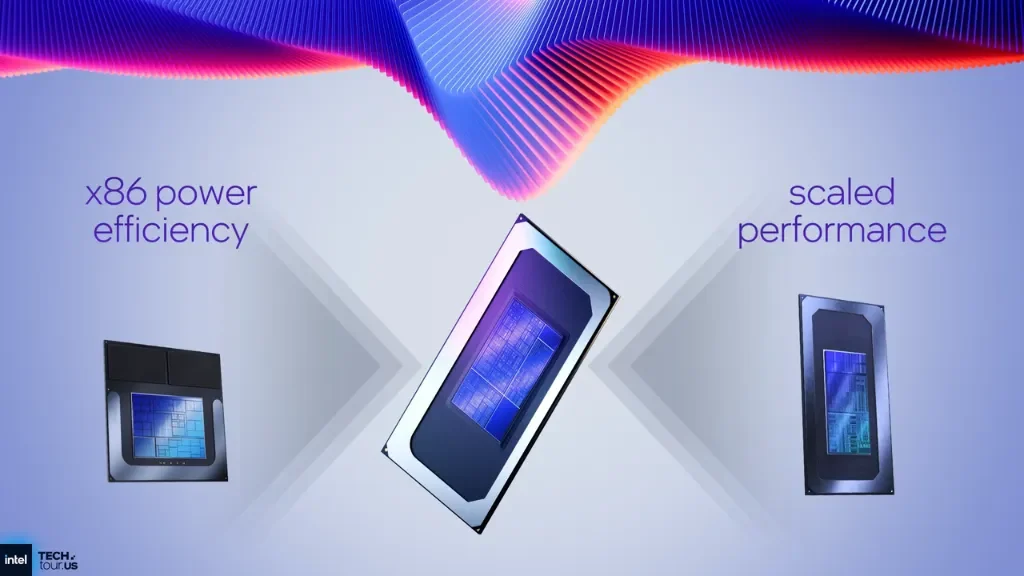
The Panther Lake architecture is a significant upgrade over the previous generation (Lunar Lake). The key improvements include a move to Intel‘s 18A process node (2 nanometers), which improves transistor density and power efficiency. The new Xe3 graphics cores deliver higher performance at lower power draw compared to the Xe2 cores in Lunar Lake. Intel took a more modular approach to the GPU tiling arrangement, giving laptop manufacturers more flexibility to scale performance up and down to hit size, price and power requirements for individual designs.
Xe3 Graphics And Arc Pro B390
The highest end chips in the Series 3 lineup feature Arc Pro B390 graphics, which has the maximum number of Xe3 cores (12 Xe cores). These chips are denoted by an “X” in the name (e.g., Core Ultra 9 X, Core Ultra 7 X).
XeSS 3 with multi frame generation
- XeSS 3 will include multi frame generation at launch, using AI to extrapolate multiple subsequent frames from a single rendered frame.
- Intel claims significantly higher gaming frame rates when using XeSS 3 upscaling and gaming at 1080p resolution.
- 1080p is the target resolution; performance at higher resolutions (1440p, 4K) is not specified.
Arc B370 graphics
- A Core Ultra 5 chip with Arc B370 graphics is also available, without the “X” designation.
- Intel has not provided gaming performance estimates for the B370 graphics.
Battery Life Claims
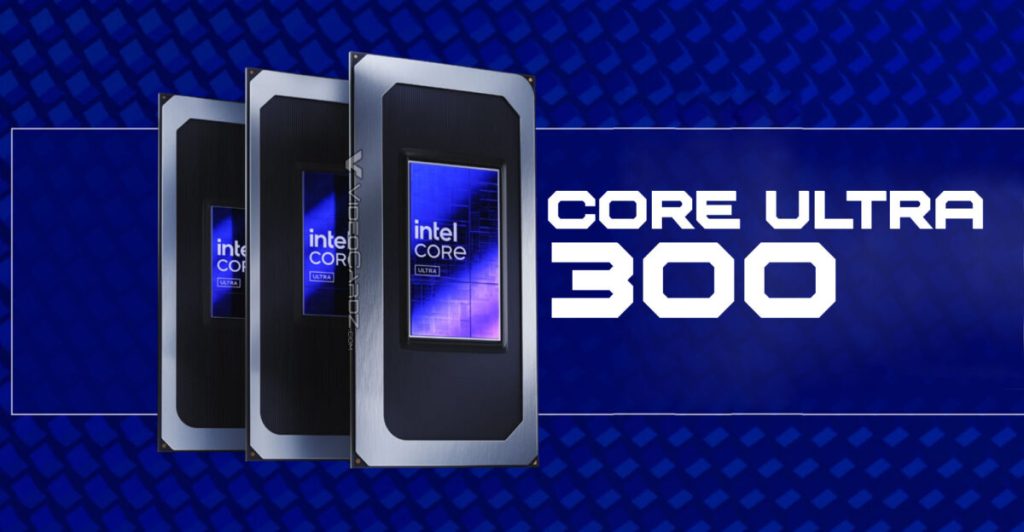
Intel claims up to 27 hours of battery life for streaming video on an Arc Pro equipped system. This is a significant improvement over previous generations. However, the 27 hour figure is for video streaming only; real world battery life with mixed usage (web browsing, office work, gaming) will be lower.
Future Handheld Gaming Platform
Intel briefly mentioned that there will be a future handheld console platform based on Panther Lake. No details were provided at CES 2026, but more information is expected later in the year. This would put Intel in direct competition with AMD‘s Z series chips (used in Steam Deck, ROG Ally, Legion Go) and Qualcomm‘s Snapdragon G series.
Core Ultra Series 3 Naming And Models
The new naming convention for Intel‘s mobile chips can be confusing. The series is now known as Series 3 (the previous generation was Series 2, though Intel rarely used that designation). There is a new “X” in chip names to denote the incorporation of Arc Pro B390 graphics (maximum Xe3 cores). The lineup includes Ultra 9 X, Ultra 7 X and Ultra 5 (with Arc B370 graphics). Intel has not provided gaming performance estimates for the non-X chips.
Key Specifications Summary
- Architecture: Panther Lake
- Process node: Intel 18A (2 nanometers)
- Graphics: Xe3 cores (12 Xe maximum for Arc Pro B390)
- XeSS version: XeSS 3 with multi frame generation
- Target gaming resolution: 1080p
- Battery life (video streaming): up to 27 hours (Arc Pro equipped systems)
- Availability: Systems shipping immediately (January 2026)
- Preorders: Open Tuesday (January 7, 2026)
- Future: Handheld gaming platform based on Panther Lake (details later in 2026)
Pros And Cons Of Intel Core Ultra Series 3
Pros
- Xe3 graphics offer better performance at lower power draw than Xe2.
- 18A process node (2nm) improves efficiency and performance.
- XeSS 3 with multi frame generation promises higher gaming frame rates.
- Up to 27 hours of video streaming battery life (Arc Pro systems).
- Modular GPU design gives manufacturers flexibility for different laptop sizes and prices.
- Future handheld gaming platform based on Panther Lake is promising.
- Systems shipping immediately (no long wait for availability).
Cons
- 27 hour battery life claim is for video streaming only, not mixed usage.
- Gaming performance claims are for 1080p only; higher resolutions not specified.
- Non-X chips (Arc B370) may have significantly lower performance.
- No details yet on the handheld gaming platform.
- Naming convention (Series 3, X designation) is confusing.
- Intel has not disclosed pricing for the new chips.
Frequently Asked Questions (FAQs)
What is the difference between Panther Lake and Lunar Lake?
Panther Lake is Intel‘s new architecture for 2026, featuring Xe3 graphics cores and a 2nm 18A process node. Lunar Lake (previous generation) has Xe2 graphics and an older process node. Panther Lake offers better performance and power efficiency.
What is XeSS 3?
XeSS 3 is Intel‘s upscaling technology, similar to NVIDIA‘s DLSS and AMD‘s FSR. The new version includes multi frame generation, which uses AI to generate multiple frames from a single rendered frame, significantly boosting frame rates.
How long does the battery last on Panther Lake laptops?
Intel claims up to 27 hours of video streaming battery life on Arc Pro equipped systems. Real world mixed usage battery life will be lower.